
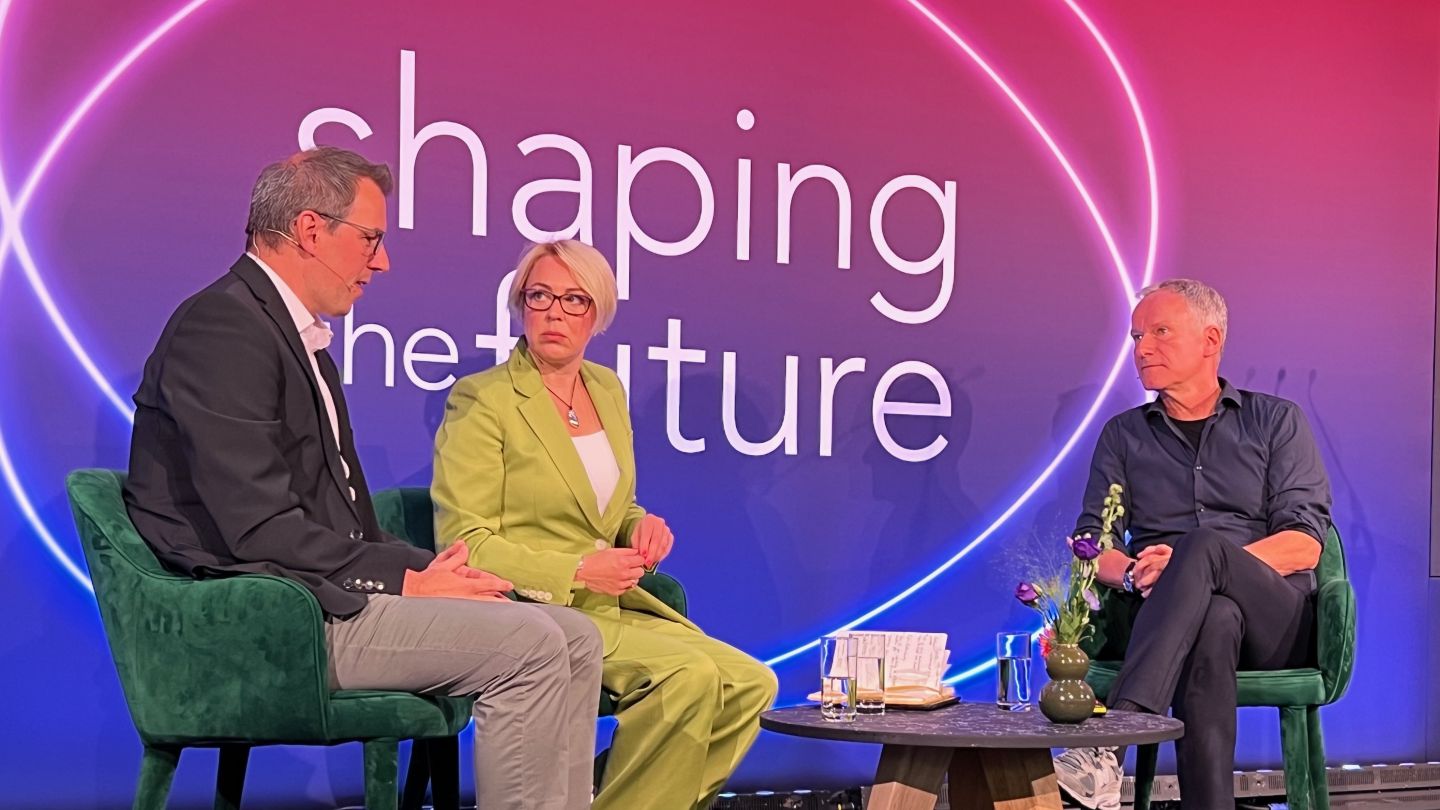
IBC Conference: ProSiebenSat 1 PULS 4’s Thomas Gruber and Fremantle’s Jens Richter explored how broadcasters can survive and thrive in an AI-driven, social media-saturated landscape.
Overall, Thomas Gruber, Co-CEO of ProSiebenSat 1 PULS 4, emphasised the role of local culture as a safeguard for authenticity, while Jens Richter, CEO Commercial and International at Fremantle, pointed to the need for global scale, and both warned that fake and manipulated videos threaten trust across the industry.
Austria Television’s hyperlocal blueprint
Gruber opened with a stark challenge: “By 2030, up to 90% of content could be created by AI. So, here’s the big question for broadcasters: how do we stay relevant? How do we grow? The answer isn’t more polish, it’s more human.”
For Gruber, Austria’s unique market requires authenticity above all. “Austria’s media market is shaped by linguistic overlap, delayed liberalisation, and cross-border competition,” he said. “It’s a market that demands strategic thinking, local insights, and a deep understanding of its unique structure.”
That philosophy is embodied in addressable TV (ATV). “ATV wins with real local stories. It connects with viewers through formats that are raw, authentic, and emotional.” He added, “ATV proves that deep cultural understanding, a commitment to raw authenticity, and the courage to be unremorsefully yourself are the keys to building the last media powers.”
The opportunity and risk of AI
While Gruber sees potential in AI to increase efficiency and creativity, he stressed the risks of losing authenticity, “AI [creates] too much content and [has] the risk of losing authenticity, but it also opens up new opportunities,” he said. “Human content will serve as the master template for AI – authenticity, emotional depth, and cultural nuance are qualities AI cannot replicate.”
Both he and Richter raised alarms about manipulated media. For Gruber, the danger is existential. “Without regulation for fake news – we’re losing it,” he said. “I have two daughters, and it’s horrible. I try to get them away, because they have to understand. You can’t just leave them in the digital world.”
Fremantle’s global approach
Jens Richter echoed Gruber’s focus on localisation but brought in Fremantle’s international perspective. “We produce in 28 countries around the world. Last year, we produced more than 12,000 hours of programming. We sold more than 30,000 hours of programming to broadcasters and platforms.”
Community connection, he said, drives success: “Really local culture, the local audiences, connecting with the local habits and cultures – that’s key for us.”
He also drew attention to the ways that social media and attention spans are reshaping production. “When you launch a drama now, something needs to happen in the first scene – there needs to be this hook.” He also emphasised that broadcasters need to be realistic about how people today are watching television. “Our audiences consume a lot of social media,” he said. “You have to assume they are on their second screen.”
Combating fakes, building trust
Richter underscored how fake and manipulated videos are already damaging established brands. “We did have an issue with YouTube. We found millions and millions of views generated with fake videos where people manipulated Got Talent,” he said. “Some stuff was really not on brand.”
He welcomed YouTube’s move to demonetise such content: “It was a huge, important step, because when we looked into this situation, it wasn’t kids in their bedrooms doing this. Those were professional producers who did it at scale.”
For both leaders, trust and brand safety are now competitive advantages. Gruber said: “Advertisers want to be in a safe area for linear television and streaming… but on social media, you cannot guarantee brand safety.”
Richter added: “Our job is quality and trust… that will also be the stuff that helps the brands in their communication.”
Local roots, global perspective
Despite their different vantage points, both Gruber and Richter agreed that combining authenticity with agility will define the next generation of winners.
“If we do not reflect our own culture, we cannot connect,” Gruber concluded.
Richter added, “The distribution landscape is not going to stabilise. The companies that succeed are those that can move with it quickly.”
Italy’s MediaForEurope (MFE) recently made moves to become the majority shareholder of Germany’s ProSiebenSat.1. Discover more here.
.jpg)
Content Everywhere stages: Groundbreaking tech and real-world results converge
IBC2026’s Content Everywhere hub in Hall 5 will host nearly 200 exhibitors showcasing multi-platform delivery and monetisation innovations, alongside two stages of panel discussions and live demonstrations.
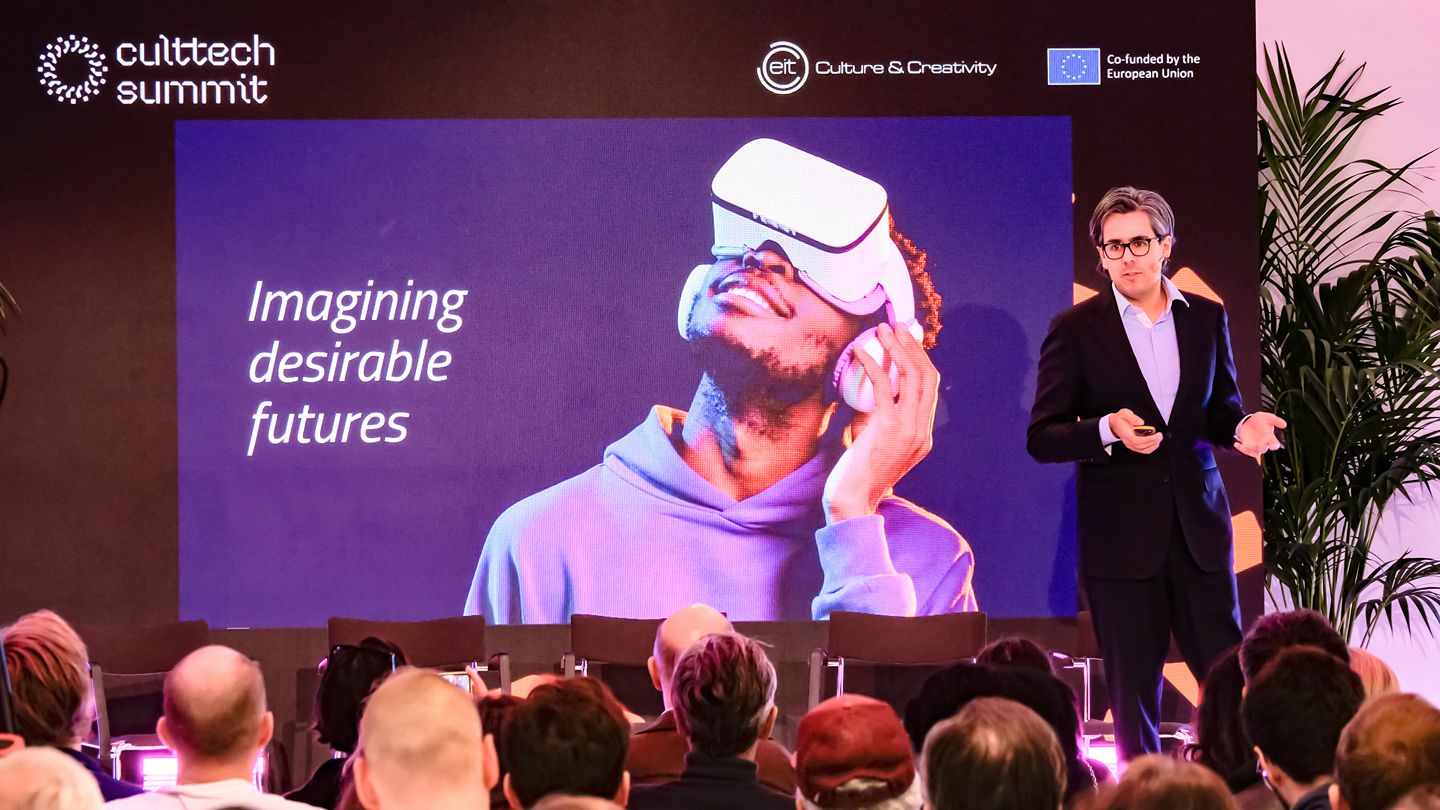
From AI production to immersive media: European innovators to watch at IBC2026
From generative production and AI-powered post-production to content discovery, immersive experiences and next-generation imaging, a group of EIT Culture & Creativity-backed ventures arriving at IBC2026 offers a snapshot of where European media innovation is heading next.
.jpg)
Innovation Awards: Exploring Content Distribution's final three
Amid a sea of competitive entries, Fergal Ringrose, Chair of Judges for the IBC Innovation Awards, breaks down the shortlisted Content Distribution entries to demonstrate exactly what got them over the line.

Network Control: Turning 5G into a production tool
Speed, flexibility, and reliability – that’s the dream for many a live production. However, when public network coverage is patchy, what’s a broadcaster to do? The 2026 Accelerator Project, Network Control, deploys standardised network APIs to tackle this problem head-on.
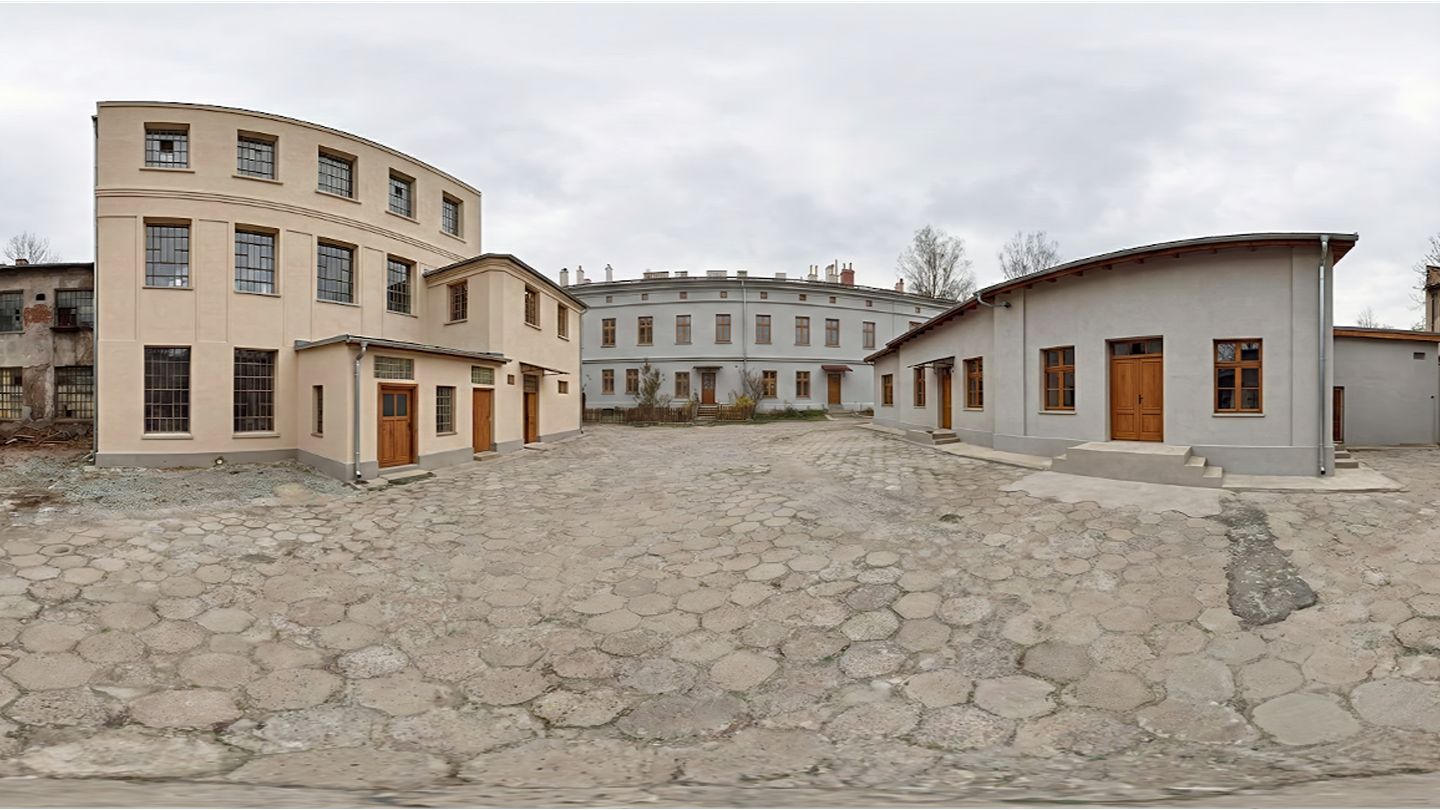
Film University Babelsberg to preview immersive Auschwitz project at IBC2026
Film University Babelsberg Konrad Wolf will present an immersive digital reconstruction of a little-known site associated with Auschwitz at IBC2026, as part of EIT Culture & Creativity's first major presence at the show.



.jpg)