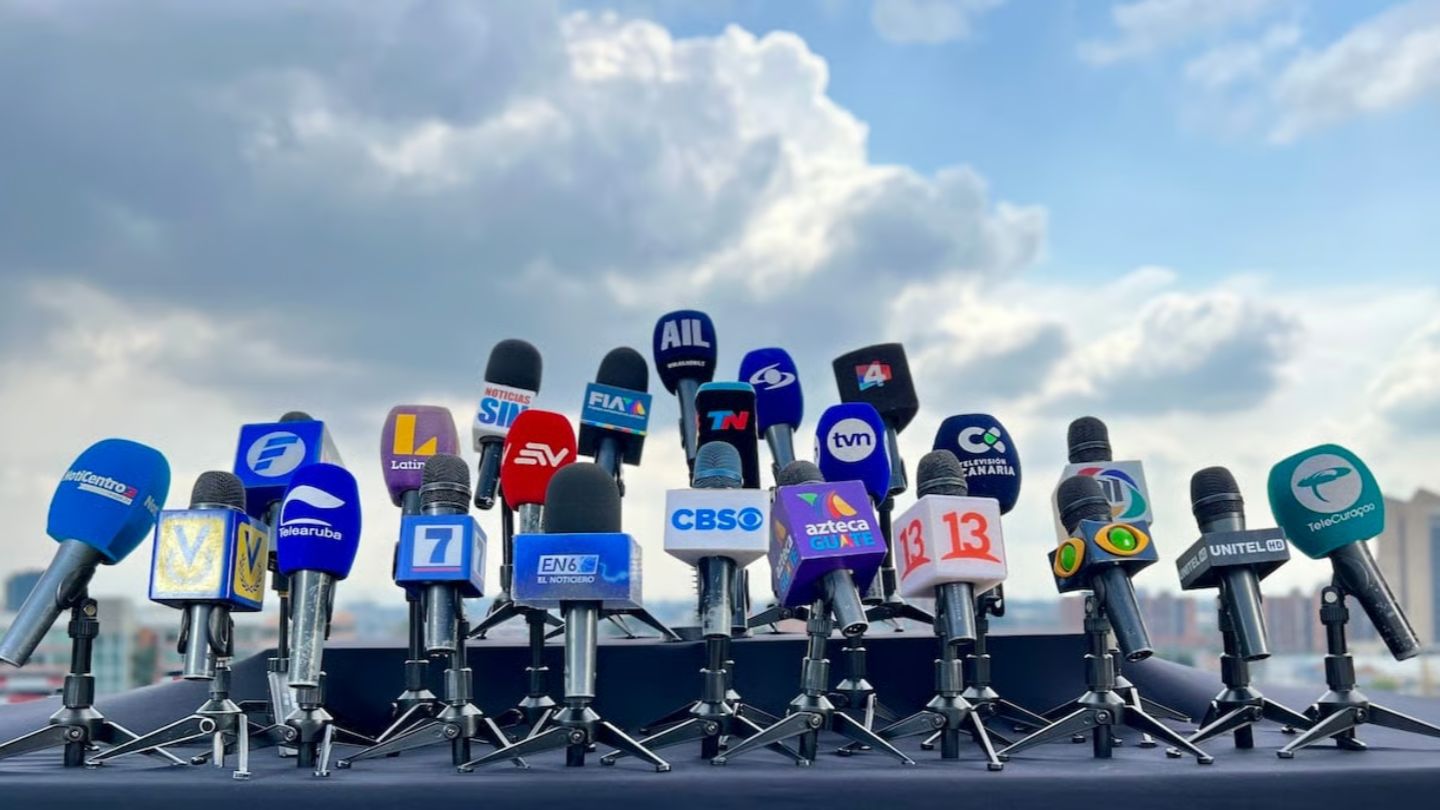
The BBC, ITV, Channel 4 and 5 have united to issue a rare joint statement calling on the government to defend public service broadcasting (PSB) in the UK.
The BBC, ITV, Channel 4 and 5 have united to issue a rare joint statement calling on the government to defend public service broadcasting (PSB) in the UK.
The rival broadcasters said the UK risked global online platforms dominating the country’s cultural landscape.
The broadcasters issued the statement at the Royal Television Society’s Cambridge Convention this week, outlining five specific actions to safeguard and enhance public service broadcasting. It was also signed by fellow public broadcasters MG Alba, S4C, and STV.
In the statement, the organisations said that PSBs help to: unite the UK’s nations and regions in shared cultural moments; provide impartial news; and act as the cornerstone of the UK’s production sector and creative economy.
By comparison, it said that global online platforms “may be impressive businesses but they are driven by profit, not purpose” and that most of their content is not subject to the same safeguards and regulatory standards as theirs.
The statement was issued at a time when PSBs are facing huge pressures as increasing numbers of viewers turn to digital platforms. YouTube is the second most-watched service in the UK, behind the BBC but ahead of ITV.
The UK broadcasters called for the following five interventions: action to ensure their content is prominent on devices and platforms where audiences spend their time – not just smart TVs but also video sharing platforms like YouTube, and on fair commercial terms; promotion of impartial news on the platforms young people use, and deals with social media companies that promote accurate reporting and combat misinformation; tax credits for homegrown stories that nurture the UK’s talent pool and for genres that help to build understanding, support social cohesion, and create cultural common ground; a managed transition to internet-delivered television; and the removal of “unnecessary barriers” so that public service broadcasters can form strategic partnerships with each other as well as non-PSBs.
The PSBs said: “Our PSBs represent the best of the UK in a highly competitive global marketplace. Fail to act, and we risk all this being lost to future generations. Get it right, and we bolster our economy while making a priceless investment in information we can trust, moments we can share, and a cultural inheritance of which we can all be proud.”
The UK’s leading public service broadcasters recently joined forces to launch Freely, a free-to-air streaming platform using the open source HbbTV operator platform. Discover more here.
.jpg)
Expanded Future Tech to showcase the very best in innovation, technology and talent
After a successful debut in 2025, Future Tech returns to Hall 14 of the RAI this year, with more features, more innovation and more of the technologies shaping the next era of media and entertainment.
.jpg)
EU approves Paramount's WBD acquisition with conditions
The European Commission has approved Paramount Skydance’s proposed $110bn acquisition of Warner Bros. Discovery.

Isabel Davis to become Director of BFI Filmmaking Funds
The British Film Institute (BFI) has named Isabel Davis as Director of its BFI National Lottery Filmmaking Funds.
Netflix uses GenAI on 300 titles in 2026
Netflix has revealed that nearly 300 titles on its platform have used generative AI, from early concept stages and pre-visualisation through to post-production and release.

Poppy Dixon appointed BBC Head of Documentaries
The BBC has appointed former Sky executive Poppy Dixon as its Head of Documentaries.