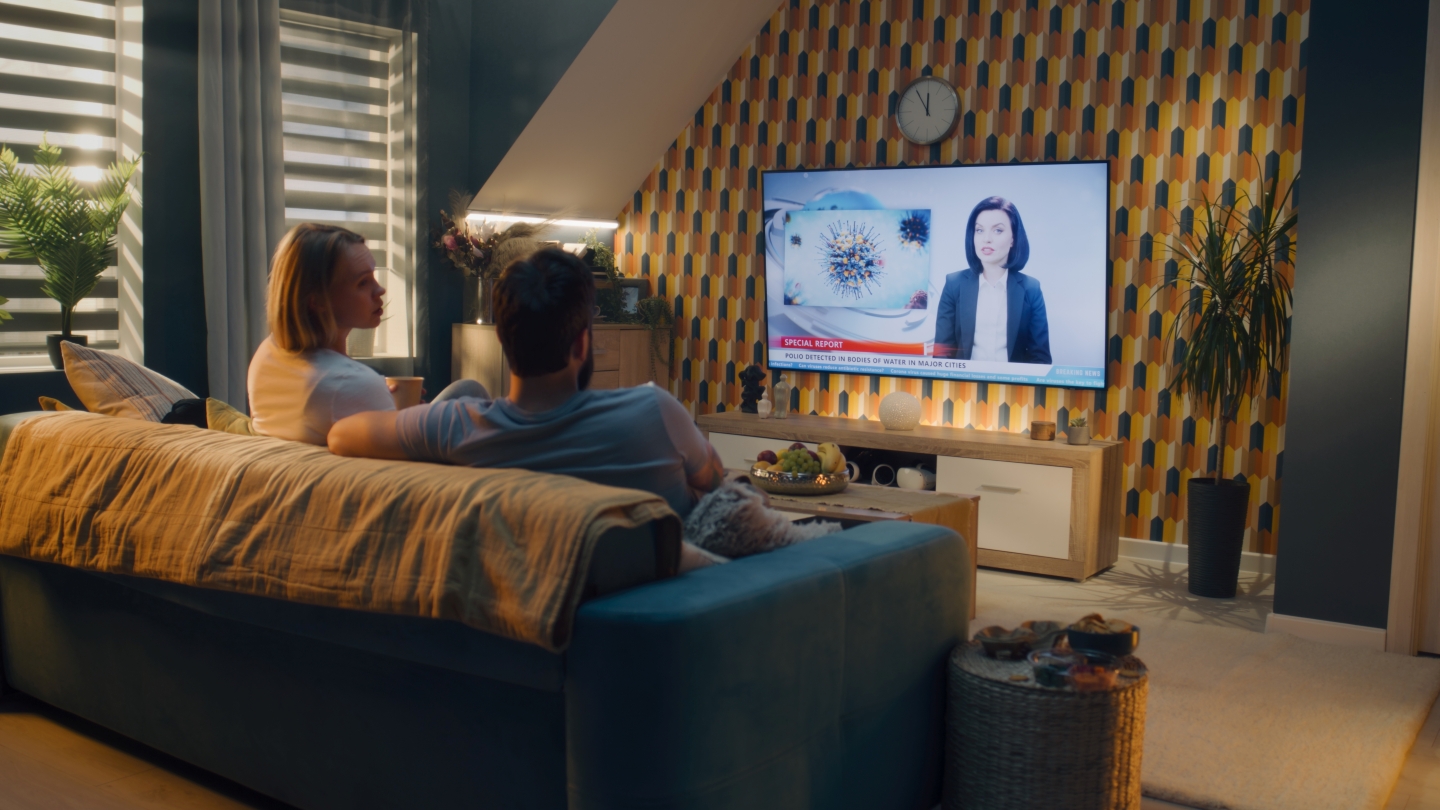
The UK government is to examine the future of linear TV broadcasting amid fears that some older and underprivileged viewers could be excluded from the general shift towards streaming.
Media Minister Stephanie Peacock has launched a forum to advise on the issue, bringing together representatives from Ofcom, broadcasters such as the BBC, ITV and Sky, infrastructure operators like Arqiva and organisations representing audiences including Voice of the Listener and Viewer.

It will consider how all viewers, including older people and those without internet connectivity on their TV, can continue to access British content as consumer habits continue to change.
The forum will have a particular focus on the pressure the rise of streaming puts on delivering traditional broadcast television in a cost-effective way.
The core aims of the group will be to ensure that “no one is left behind amid a shift towards online viewing, and to establish a sustainable television ecosystem that works for both audiences and the industry.” The forum is due to meet quarterly, starting later this month.
Gill Hind, COO and Director of TV at Enders Analysis, Richard Lindsay-Davies, CEO of research and technology organisation Digital TV Group, and DCMS College of Experts academic Catherine Johnson will chair three smaller working groups supporting the forum, representing the TV sector, infrastructure and audience groups.
Research published by the government predicts that 95% of households will have the capacity to watch TV over the internet by 2040. However, 5% of households, or 1.5 million people, will still rely on traditional linear broadcasting by the same year, without intervention.
This ‘unconnected’ group tends to be significantly older, have a lower socioeconomic status and live in rural communities, said the research. The cost of broadband and lack of digital skills are key factors in preventing households from adopting Internet Protocol Television (IPTV) or programmes delivered via the internet.
Media Minister Stephanie Peacock said: “Streaming has revolutionised the television industry. Viewers have never had more choice over what to watch and how to access content. As the shift towards streaming and watching live broadcasting online continues, it is vital that no one is left behind. I want to ensure that as many people as possible can watch TV in a way that suits them.”
You are not signed in
Only registered users can comment on this article.

Big Blue Marble to run PoC for MoQ
Austrian media technology company Big Blue Marble has announced a multi-month proof of concept (PoC) for media over QUIC (MoQ) during a major international football championship.

M2M Media joins SRT Alliance
M2A Media, a cloud-native live video distribution platform, has joined the SRT Alliance.

Global FAST viewing grew 55% in 2026, Amagi reports
Amagi, a provider of an agentic industry cloud platform for unified broadcast, streaming, and monetisation, has announced the June 2026 edition of its Airtime Report, the company’s quarterly analysis of global FAST trends.

Synamedia appoints new CEO
Synamedia has appointed Tzvi Gerstl as its CEO. Gerstl will replace Paul Segre, who is moving to the role of Executive Chairman.

Bitcentral splits in two
Bitcentral has created two separate media technology companies: Bitcentral and ViewNexa. Both companies are now operating independently under their new structures.