At IBC 2025, visualisation technology specialist Chaos will present Chaos Arena, its real-time path tracer that has been designed as an alternative to game engines to transform virtual production workflows.
Chaos Arena is intended to offer a cost-effective, artist-friendly approach to virtual production. It can move assets from any digital content creator (DCC) to an LED wall, bringing final-pixel quality visuals directly on virtual stages without any time-consuming do-overs. By removing technical barriers, Arena empowers filmmakers and artists to make creative decisions on set without compromising quality. According to Chaos, the solution an be used for shoots of all scales – from advertising to blockbuster productions, making virtual production accessible to all. For example, Arena can be used for shooting a product commercial on a small LED screen or a feature film on a full-scale volume.
With this path tracer, artists can move ray-traced 3D content created in traditional pipeline DCCs like Maya, Houdini, Blender, and 3ds Max to LED walls in minutes, either via Chaos’ native V-Ray Scene file format or through recently introduced support for USD and MaterialX. Artists can now use the same assets from pre to post and benefit from real-time path tracing and a level of stability that wasn’t possible before. By supporting open standards, Arena’s technology is accessible to non-V-Ray users, meaning assets and shaders created outside the Chaos ecosystem can be brought in easily.
Arena delivers fully path-traced quality in real time, accurately capturing lighting and blending virtual environments with physical sets. As it’s fully ray-traced, Arena can apparently handle near-limitless geometry. In fact, Chaos team tested a 2.4 trillion-polygon scene during the three-day shoot of their short film Ray Tracing FTW, without a single crash.
With support for a range of industry-standard camera tracking protocols, colour management standards, and distributed rendering with smooth edge blending, Chaos Arena can purportedly adapt to a wide range of virtual stage setups and integrate with LED volumes of any size.
Chaos’s real-time renderer for virtual production features NVIDIA Deep Learning Super Sampling (DLSS) Ray Reconstruction, which uses AI to instantly process ray tracing data for sharper, more detailed images. Arena also supports USD and MaterialX and has recently added support for rendering Gaussian splats, making it easier to bring real-world locations directly onto the stage, without flying in an entire crew. Artists can freely add or modify 3D objects to suit their creative vision, with ray-traced splats ensuring nothing looks out of place. Additional features like material editing continue to expand its toolset and creative control on set.
.png)
Chaos Arena works with NVIDIA RTX PRO GPUs, leveraging 4th-gen RT Cores and 5th-gen Tensor Cores for optimal performance, and supports large GPU memory for larger, more complex scenes.
At IBC 2025, Chaos will showcase Chaos Arena, its virtual production solution. Visit booth 14.D57 in the Future Tech Zone to meet the team. Discover more here.
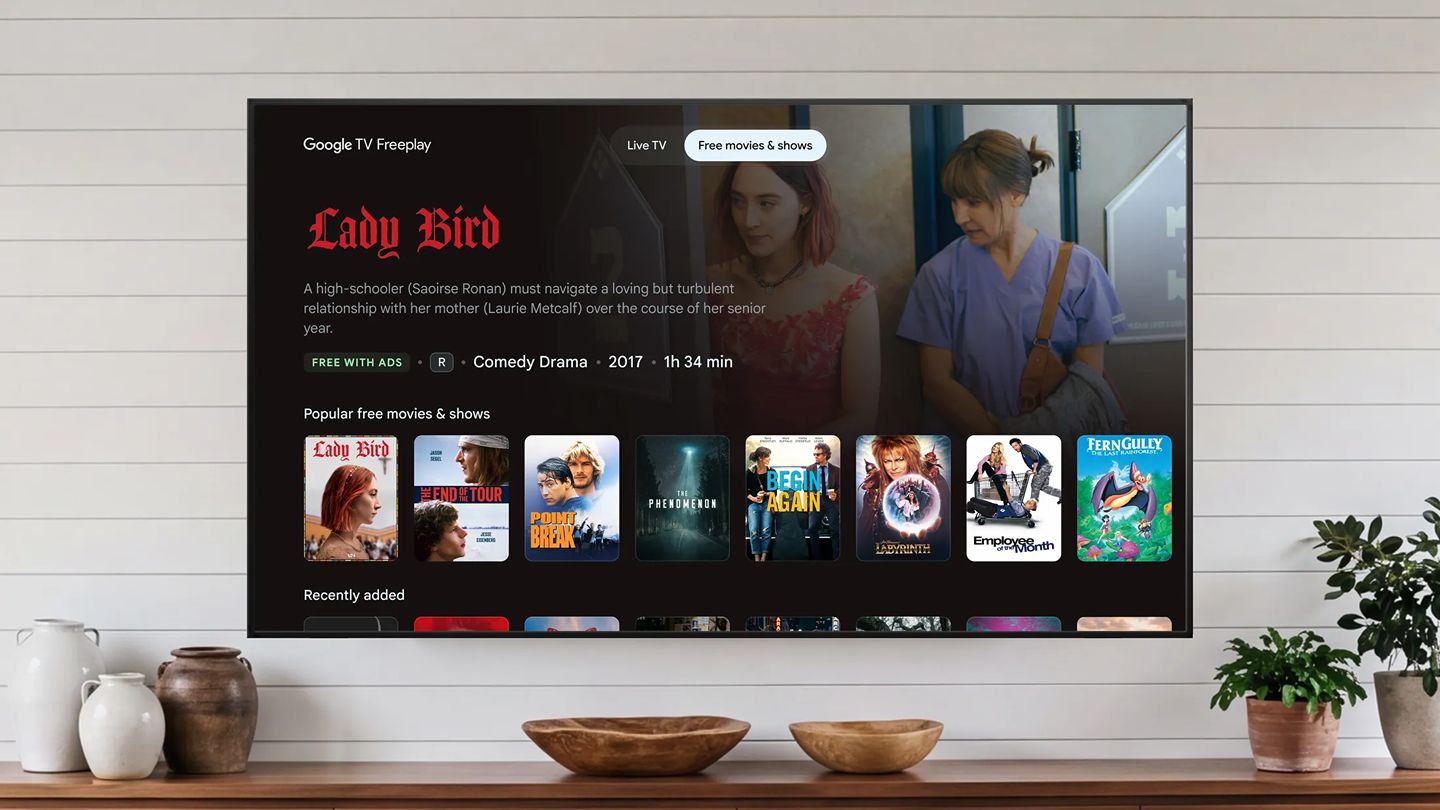
Google TV upgrades Freeplay streaming service
Google is upgrading its US free streaming service Google TV Freeplay, adding on-demand video to its FAST channel offering.

iPhone users outspend Android users on booming micro-dramas
iPhone users spend around 40% more on micro-drama apps than Android users, according to Omdia research, challenging common assumptions about who consumes and pays for the rapidly growing form of entertainment.
.jpg)
Full IBC2026 conference agenda: Innovators and technology leaders take to the stage
Exploring the three core pillars of IBC2026 – shifting business models, transformative tech, and people and purpose – this year's free-to-attend showfloor content programme will address the biggest issues impacting the global media and entertainment community.

OBS to receive IBC2026 International Honour for Excellence
IBC will present the International Honour for Excellence (IHFE) to Olympic Broadcasting Services (OBS) – recognising the company’s decades of innovation in live sports production and its far-reaching impact on the global broadcast industry.
.jpg)
ESPN and Disney+ test AI-powered search and discovery tools
Disney-owned platforms ESPN and Disney+ are beta testing AI-powered features designed to help audiences find information and content.