
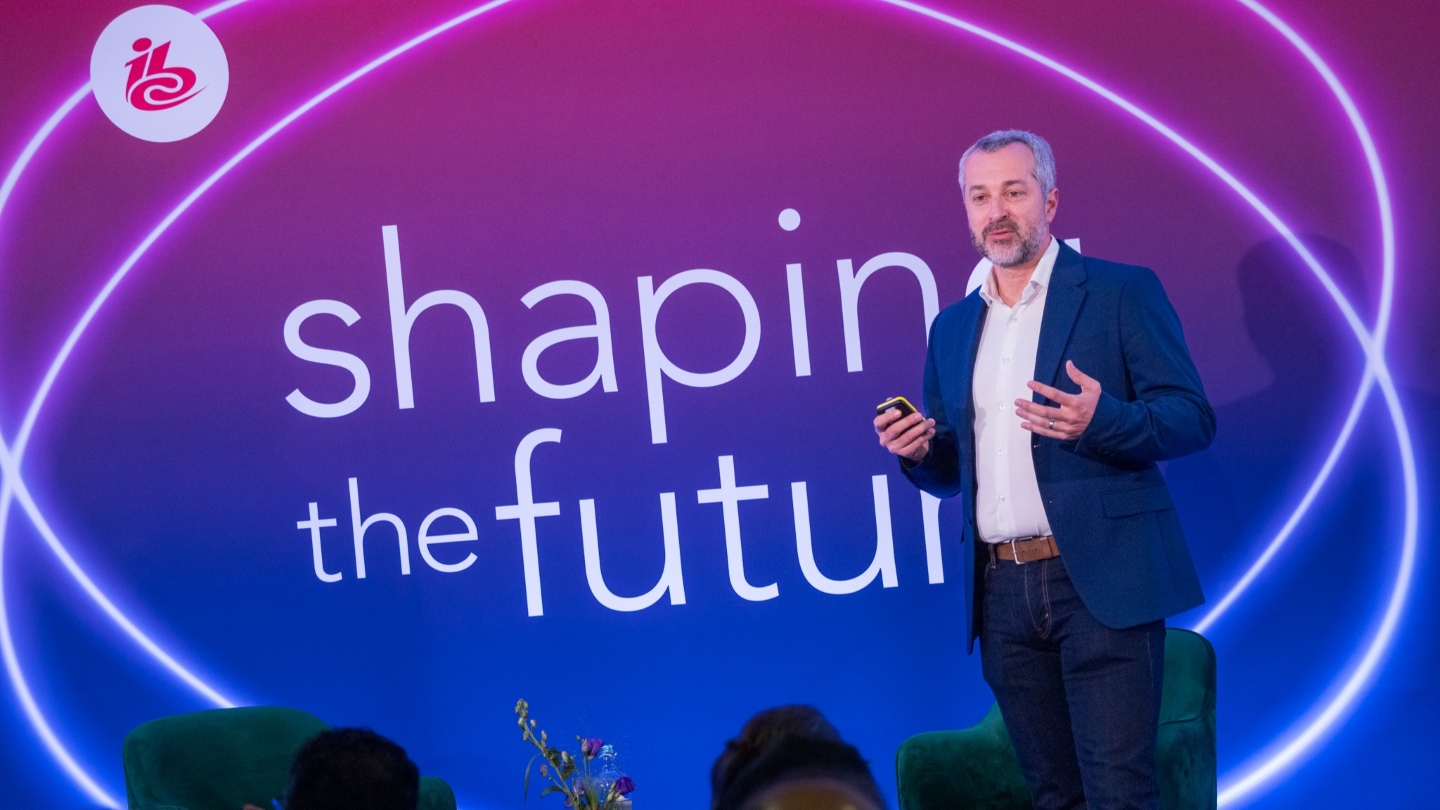
IBC Keynote: ABC’s Damian Cronan unveiled how the Australian public broadcaster is deploying AI through its “ABC Assist” tool. The system is designed to support staff, streamline workflows, and unlock archives, all while staying true to editorial values.
Taking to the stage on day two (13 Sept) of IBC2025, Damian Cronan, Chief Digital and Information Officer (CDIO) at ABC was clear about the broadcaster’s intentions: “We are not out to replace journalists with an AI bot.”
He added: “How do we assist our journalists to be more efficient, more effective, more impactful in their journalism every day?”
That philosophy underpins ABC Assist, the in-house AI tool now being rolled out across the broadcaster’s 5,000-strong workforce. Cronan stressed that the emphasis has been on empowering staff. “We want staff to be accountable for their work and the quality of their journalism. So how do we assist the workforce? By providing them a research tool, allowing content makers to rapidly understand discovery and focus on high-quality stories.”
Four pillars of AI investment
Cronan described ABC’s four pillars of AI investment. “First, we want to give universal access to everyone. Then we’re seeing very domain specific tool use and utilisation. And then for the elements that we can’t buy, that the market will not solve, how do we focus our engineering time and effort on the areas that are going to make competitive advantage for us that we cannot secure commercially? Then we want to just have that flywheel of experimentation and innovation to sit along with it.”
The approach balances pragmatism with ambition: using off-the-shelf solutions where possible, while targeting investment in tools like Assist that confer a competitive advantage.
Building the architecture
Central to ABC Assist is an architecture built around the broadcaster’s vast archives. “By legislation, we’re obligated to retain everything we produce. We are sitting on hundreds of thousands of hours of content,” Cronan said.
The system ingests that material, applying a multimodal model for semantic understanding, before creating metadata and embeddings stored in a vector database. A large language model (LLM) then provides the interface. “We wanted a LLM that would respond and write back to us as another journalist, consistent with our own editorial standards,” Cronan noted. “We needed to make sure the model was particularly grounded and minimise any risk of hallucinations.”
This design allows natural-language search across decades of radio, TV, and digital output down to the frame level. “If you’ve got 90 minutes of file footage in the archive, a lot of you spend a lot of time scrubbing through that to find the particular full quote or particular interview segment that you need. We’ve used AI in this instance so it will take you to the frame specific reference that is most relevant to the question you asked.”
Lessons learned
The development process wasn’t without friction. “We spent the first two months storming,” Cronan admitted, describing the culture clash between fast-moving digital teams and rules-driven archivists. But the result is a product now being used by 600–700 staff, with rollout planned to thousands more.
Early impact has been clear: faster turnaround times, surfacing unexpected story leads, and reducing research workloads. Cronan sees this as just the beginning. “We’ve now got a model that I can’t buy – it’s got everything the ABC has ever produced in it. Having built that level of confidence, we can now look at audience-facing propositions.”
For now, Assist remains an internal tool, a deliberate choice to ensure safety and trust. “Trust is such a major part of the brand and value of the organisation,” Cronan emphasised.
.jpg)
Content Everywhere stages: Groundbreaking tech and real-world results converge
IBC2026’s Content Everywhere hub in Hall 5 will host nearly 200 exhibitors showcasing multi-platform delivery and monetisation innovations, alongside two stages of panel discussions and live demonstrations.

From AI production to immersive media: European innovators to watch at IBC2026
From generative production and AI-powered post-production to content discovery, immersive experiences and next-generation imaging, a group of EIT Culture & Creativity-backed ventures arriving at IBC2026 offers a snapshot of where European media innovation is heading next.
.jpg)
Innovation Awards: Exploring Content Distribution's final three
Amid a sea of competitive entries, Fergal Ringrose, Chair of Judges for the IBC Innovation Awards, breaks down the shortlisted Content Distribution entries to demonstrate exactly what got them over the line.

Network Control: Turning 5G into a production tool
Speed, flexibility, and reliability – that’s the dream for many a live production. However, when public network coverage is patchy, what’s a broadcaster to do? The 2026 Accelerator Project, Network Control, deploys standardised network APIs to tackle this problem head-on.
Film University Babelsberg to preview immersive Auschwitz project at IBC2026
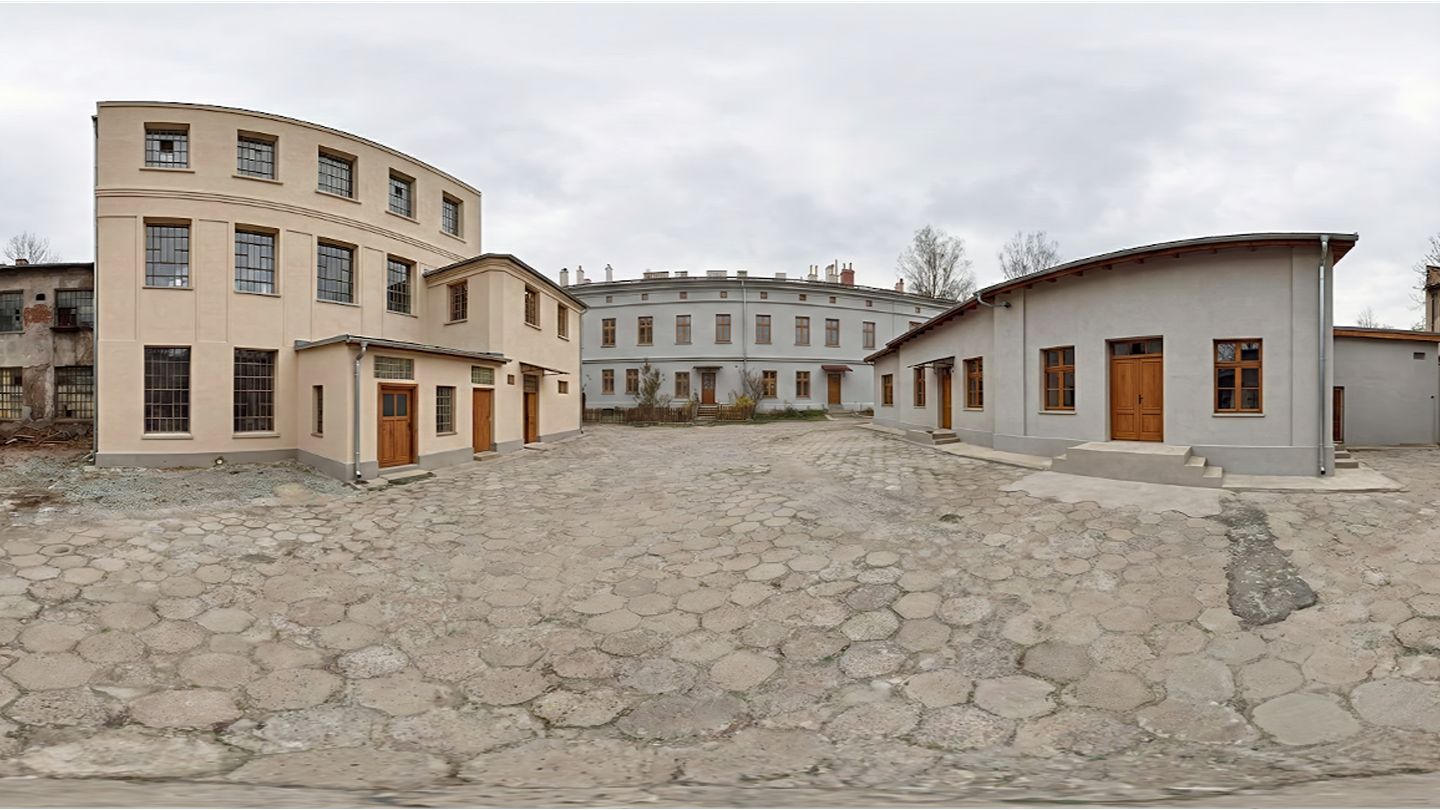
Film University Babelsberg Konrad Wolf will present an immersive digital reconstruction of a little-known site associated with Auschwitz at IBC2026, as part of EIT Culture & Creativity's first major presence at the show.

.jpg)