
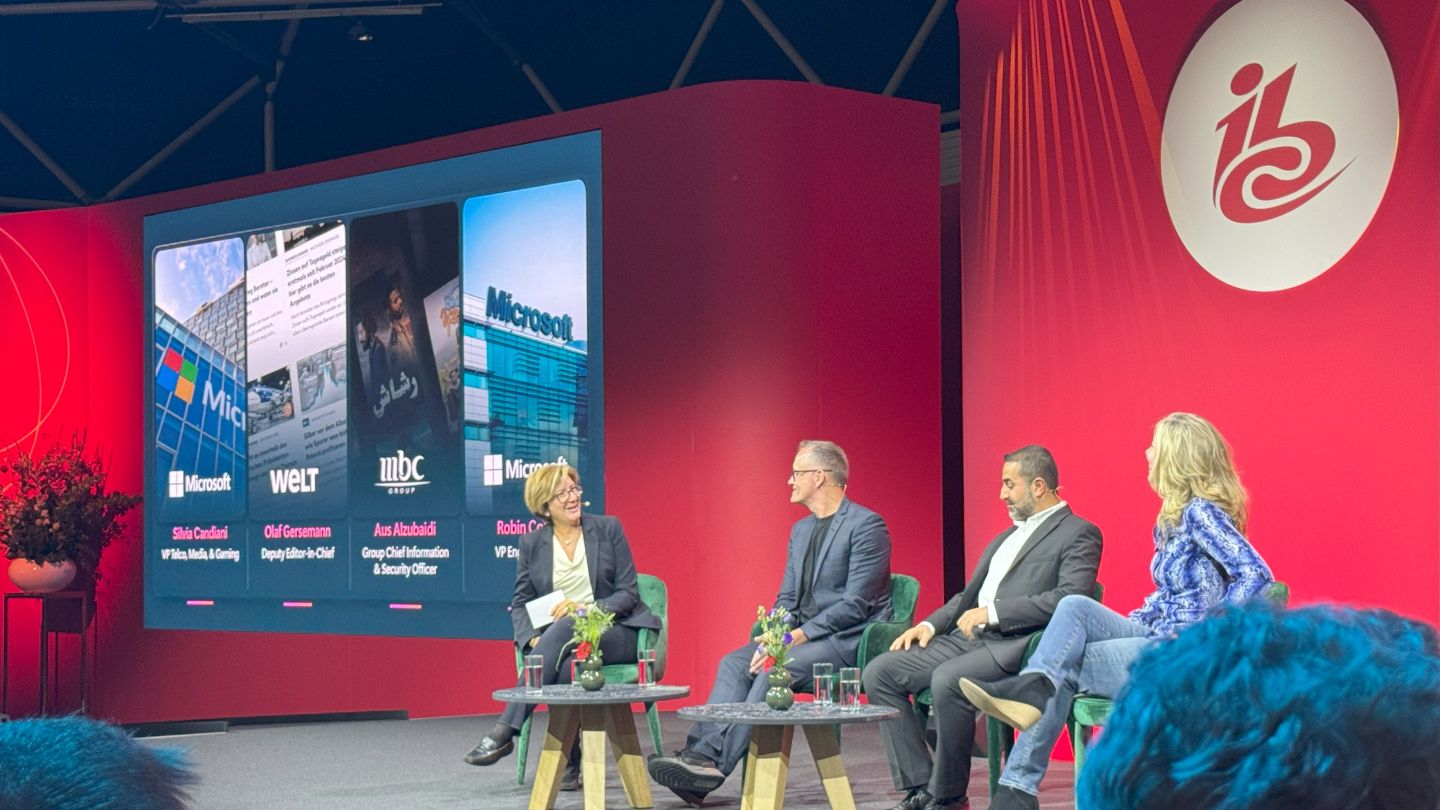
IBC Conference: In the session titled “The Frontier of Creativity: Making the Leap with AI to What’s Next”, industry leaders from Microsoft, MBC, and WELT explored the cutting-edge AI use cases that are solving practical business problems for media companies. Neal Romanek reports.
AI has been raised in almost every conversation at this year’s IBC conference, but a Microsoft-helmed panel shouted louder than most about the potential benefits of the technology.
With participation from Microsoft AI customers, the session kicked off with an overview of AI from Kathleen Mitford, Corporate Vice President (VP) of Global Industry Marketing at Microsoft.
“How do you stand out? What will it take to keep telling compelling stories and growing revenue in a world that is constantly changing?” Mitford asked.
Accompanied by AI-generated slides, the opener introduced and hammered home Microsoft’s new branding concept of “going frontier”.
“AI goes beyond making you faster. It’s about becoming [a] frontier. That means embracing AI in every part of your business.”
A, presumably fictional, case study of a start-up company looking to build a new content stream, ran through the gamut of Microsoft’s AI tools. These included Copilot, AI agents and “you”, plus a demonstration of how Microsoft AI can analyse engagement of the content after publication.
Tuning in
The real meat of the matter was served by Silvia Candiani, Vice President of Telco, Media and Gaming at Microsoft, when he spoke with: Aus Alzubaidi, Chief Information and Security Officer at Middle East and North Africa (MENA) media giant Middle East Broadcasting Center (MBC) Group; Olaf Gersemann, Deputy Editor-in-Chief at WELT; and Robin Cole, VP of Engineering at Microsoft.
Coming from a long legacy of traditional publishing, WELT has been challenged with staying relevant in an all-digital world – a challenge that it has been facing for decades now. WELT’s Olaf Gersemann sees AI as the latest in what has already been a history of challenge.
He said: “AI is disrupting our industry like the internet did 30 years ago. Most of our business – the newspaper business – focuses on process innovation and making what we already do more efficient.”
Now, WELT is using AI for product innovation and helping its teams do things that weren’t possible before. Among the new features AI has enabled is an audio briefing that summarises the most recent news stories for WELT customers. The audio summaries are created and published with virtually no human contribution to the process.
WELT’s journalists and contributors are an essential part of their brand. The company is also using AI to create digital avatars of their team members, who can present videos of stories in their own voices and with their own AI-generated faces.
Industry-wide research
MBC’s Aus Alzubaidi has been experimenting with AI and machine learning (ML) for some time now.
“With the current toolset we have in place, there’s no excuse not to experiment. Fail fast, fail safe. This will help you move away from a project mindset.”
AI has enabled MBC to open up its content to wider audiences.
“We can now create synopses on the fly, which has allowed staff to focus on other aspects of their work. In the Middle East, we have multiple Arabic dialects, but now we’re able to dub and fix lip sync on the fly.”
Microsoft’s Robin Cole emphasised that AI adoption shouldn’t be just a technology decision. The whole point of AI is to empower everybody across the business, not just the technology teams.
“Don’t just work with the innovation lead, work with business leaders too.”
Microsoft has adopted what it calls a “hypervelocity” engineering approach, which allows for rapid iteration to solve problems. A big part of Cole’s job is getting customers up to speed with tools that can transform their business, but which they may not fully understand. In that role, she welcomes the AI naysayers.
“Microsoft is used to dealing with sceptics. Sceptics are job security as far as I’m concerned.”
Middle East broadcaster and streamer MBC Group has named Mike Sneesby as its new CEO. Discover more here.
.jpg)
Content Everywhere stages: Groundbreaking tech and real-world results converge
IBC2026’s Content Everywhere hub in Hall 5 will host nearly 200 exhibitors showcasing multi-platform delivery and monetisation innovations, alongside two stages of panel discussions and live demonstrations.
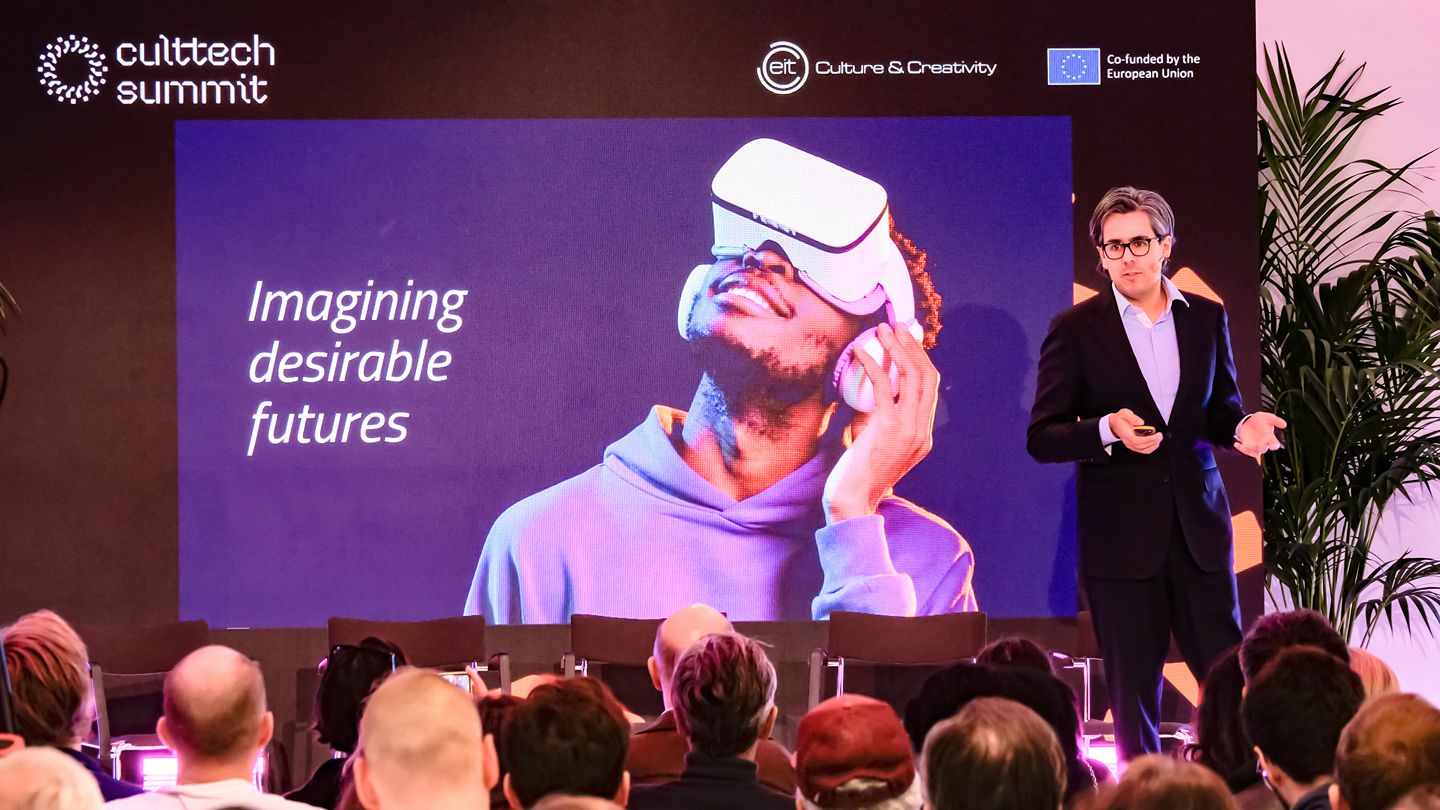
From AI production to immersive media: European innovators to watch at IBC2026
From generative production and AI-powered post-production to content discovery, immersive experiences and next-generation imaging, a group of EIT Culture & Creativity-backed ventures arriving at IBC2026 offers a snapshot of where European media innovation is heading next.
.jpg)
Innovation Awards: Exploring Content Distribution's final three
Amid a sea of competitive entries, Fergal Ringrose, Chair of Judges for the IBC Innovation Awards, breaks down the shortlisted Content Distribution entries to demonstrate exactly what got them over the line.

Network Control: Turning 5G into a production tool
Speed, flexibility, and reliability – that’s the dream for many a live production. However, when public network coverage is patchy, what’s a broadcaster to do? The 2026 Accelerator Project, Network Control, deploys standardised network APIs to tackle this problem head-on.

Film University Babelsberg to preview immersive Auschwitz project at IBC2026
Film University Babelsberg Konrad Wolf will present an immersive digital reconstruction of a little-known site associated with Auschwitz at IBC2026, as part of EIT Culture & Creativity's first major presence at the show.

.jpg)