
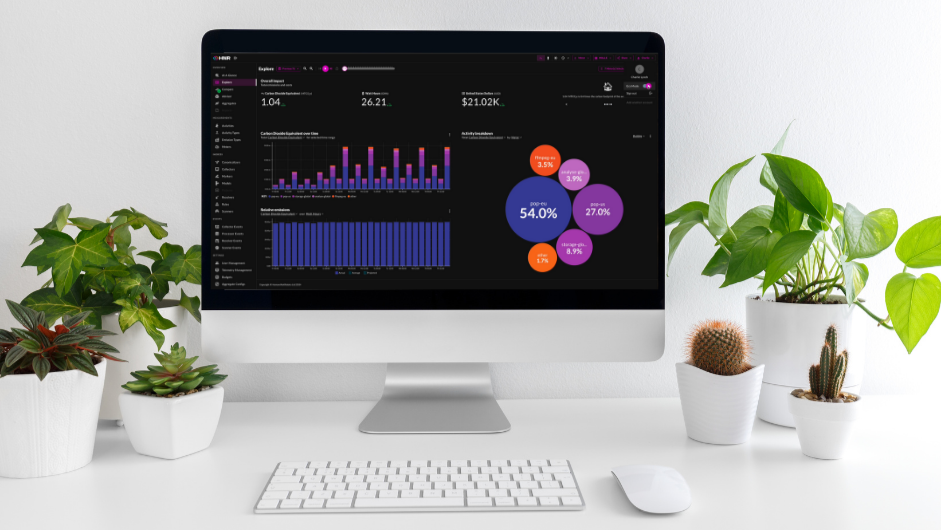
Increasingly powerful analysis platforms, infrastructure optimisation, improved resource utilisation and new methods of compression are among the developments helping the streaming sector to reduce its environmental impact, writes David Davies.
With broadcast and media’s environmental footprint rightly under greater scrutiny than ever before, the onus on organisations to adopt – and, moreover, to show they have adopted – more sustainable workflows and practices is now acute. Given that streaming and OTT services are so new in relative terms, and that new platforms continue to be developed and launched on a fairly regular basis, it makes sense for this to be a particular focus of sustainability action...
You are not signed in
Only registered users can read the rest of this article.
.jpg)
Innovation Awards: Investigating 2026’s Content Creation finalists
What does it take to win a technological innovation award in Content Creation? Fergal Ringrose, Chair of Judges for the IBC Innovation Awards, assesses the top three projects in the running – revealing the key characteristics of each of the most competitive submissions.
Branded entertainment: Money, freedom, and audiences unite
As traditional broadcasters battle decreasing budgets and attention spans, brands have come to the fore as collaborators in an increasingly lucrative and creatively fertile strand of the media business.

FRAMES: Automating the archive end-to-end
Despite the availability of hundreds of generative AI tools, pre-production environments are still struggling to find a semantic archive search solution that is technically feasible and effective in the real world. Enter FRAMES.
 (1).png)
IBC Accelerator: Scaling the future of immersive festival experiences
Stepping beyond the screen, this IBC Accelerator project has set out to meld immersive technology and audience interaction into an entirely new form of audience engagement.

Content Everywhere: From AI promise to commercial reality
If IBC2025 was defined by conversations about artificial intelligence’s transformative potential, the past 12 months have been about proving where it can deliver tangible business value. CE exhibitors now describe a market that has become more pragmatic.
.png)