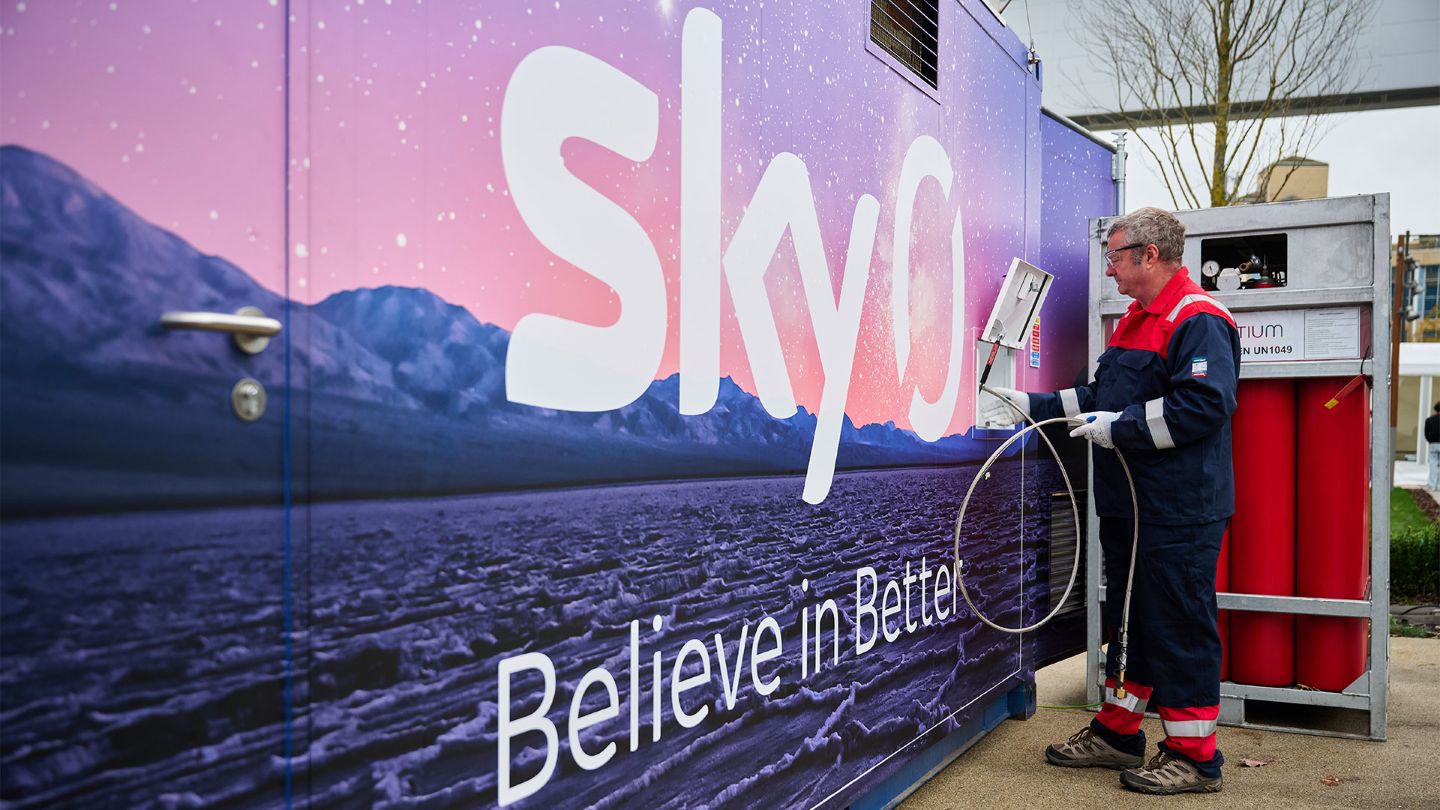
The UK film and TV industry has agreed on a plan to permanently shift to clean solutions for temporary power on sets.
Unveiled by environmental organisation Bafta albert, the ‘Spark: Clean Temporary Power by 2030’ initiative is billed as the industry’s roadmap to transition away from fossil-fuel generators and towards cleaner power solutions.

Leading film and TV firms have signed an accompanying industry Statement of Intent to accelerate sustainable screen production practices in energy use. They include Bafta albert, BBC, BBC Studios, BFI, Channel 4, Fremantle, ITV, ITV Studios, Netflix, Pact, Sky, UKTV, and Universal International Studios.
Spark was developed in 2025 through research and consultation with industry stakeholders’ energy experts and validated by independent experts from Imperial College London (via Imperial Consultants). It is accompanied by an industry Statement of Intent to accelerate sustainable screen production practices in energy use.
In 2024, UK productions burned over 3 million litres of fossil fuels in generators, and more than half of all productions relied almost entirely on fossil fuels.
The Statement of Intent reads: “The UK film and TV industry faces an imperative: to modernise its operations, and in doing so, seize the opportunity to tackle a significant source of our emissions.
“For decades, the standard practice of using fossil fuel generators to power productions has been among the most environmentally damaging aspects of film and TV production, directly contributing to carbon emissions, noise pollution, and poor air quality.
“We share a unified vision to achieve Clean Temporary Power by 2030. This vision is about creating a better, more efficient, and more sustainable future for screen production in the UK.”
The publication outlines the need to phase out fossil fuels and stand-alone generator use before 2030, transitioning via hybrid generators and hydrotreated vegetable oil (HVO) fuel, where necessary, and to phase in grid power, battery solutions, and other clean technologies, to make meaningful environmental changes.
Spark has identified three pillars of action that will guide the film and TV industry’s transition to clean temporary power by 2030. These are ‘Reduce’ (cut energy demand and emissions through efficient planning and equipment), ‘Retool’ (upgrade infrastructure and technology for clean power), and ‘Reskill’ (equip teams with knowledge and training to plan, budget, and operate clean power solutions).
April Sotomayor, Head of Industry Sustainability for Bafta albert, said: “The climate crisis demands urgent action, and our industry has both the responsibility and the opportunity to lead.
“Support of Spark signals the beginning of a collective movement as organisations ranging from broadcasters, media and production companies, suppliers and others not only support Spark but internalise its recommendations to enable change. We expect many others to sign the Statement of Intent as the campaign grows and accelerates industry-wide action.”
Matt Scarff, Managing Director of Bafta albert, commented: “The first tranche of signatures on the Clean Temporary Power by 2030 Industry Statement of Intent is testament to how seriously the UK film and TV industry takes its responsibility to produce sustainable screen content. To see this level of collaboration from our members – and commitment to momentum around clean temporary power – is incredible.”
Bafta recently confirmed the Chairs and Deputy Chairs of its influential Film, Games, and Television Committees. Discover more here.

OBS to receive IBC2026 International Honour for Excellence
IBC will present the International Honour for Excellence (IHFE) to Olympic Broadcasting Services (OBS) – recognising the company’s decades of innovation in live sports production and its far-reaching impact on the global broadcast industry.
.jpg)
ESPN and Disney+ test AI-powered search and discovery tools
Disney-owned platforms ESPN and Disney+ are beta testing AI-powered features designed to help audiences find information and content.
.jpg)
Ad tiers become dominant streaming monetisation model in North America
Revenues from ad-supported tiers in North America are set to exceed $45bn this year, accounting for more than half of all subscription streaming revenues, according to Ampere Analysis research.
.jpg)
Canal+ strikes Africa deal for UEFA football
French pay-TV group Canal+ has acquired exclusive rights in all languages of the clubs’ Men’s European cups in Sub-Saharan Africa from mid-2027.

Arqiva completes major upgrade of UK digital radio platform
Broadcast infrastructure firm Arqiva has completed a major transformation of the infrastructure that supports commercial digital radio across the UK.
.png)