
Streaming revenues for 22 Eastern European countries will climb 82% by 2029, according to new figures from Digital Research.
Digital TV Research said OTT (over-the-top) revenues in Eastern Europe will reach $6.96bn in 2029, up from $3.82bn in 2023.
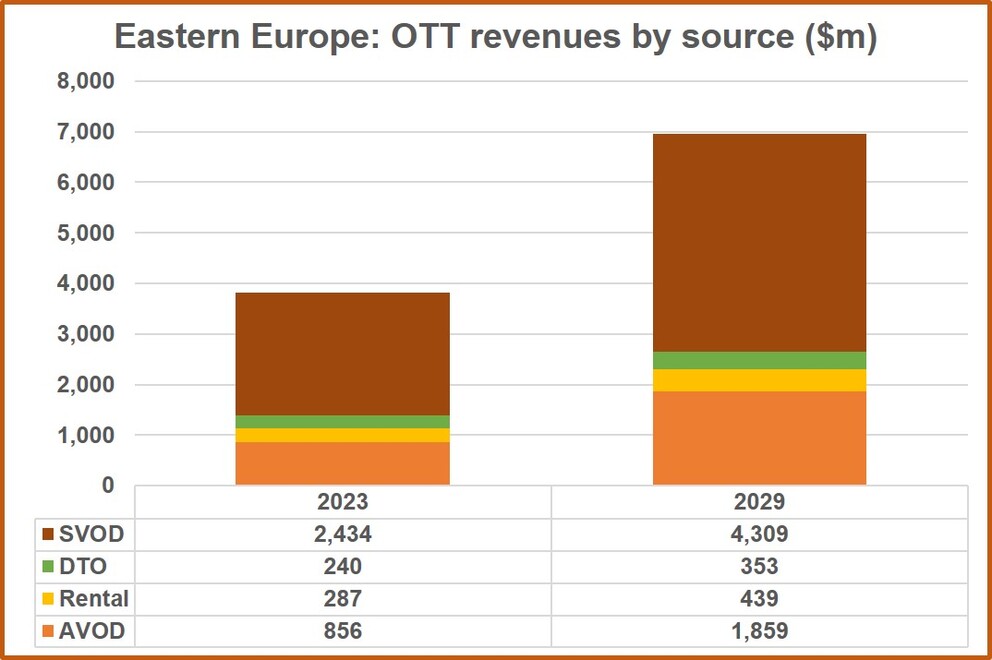
From the $3.1bn additional revenues between 2023 and 2029, Russia will provide $1bn and Poland $0.7bn.
Simon Murray, Principal Analyst at Digital TV Research, said: “Together Poland and Russia will account for two-thirds of the region’s 2029 revenues. This means that the remaining 20 countries will share $2.57bn – or an average of only $129m each.”
Subscription video-on-demand (SVOD) revenues will reach $4.3bn by 2029 – up from $2.4bn in 2023. Russia and Poland will be the only countries to generate SVOD revenues in excess of $1bn by 2029.
Advertising video-on-demand (AVOD) will add $1bn to take its total to $1.9bn. Rental revenues will hit $439m, while download to own (DTO) will rise to $353m.
Streaming platforms with a presence in Eastern Europe include HBO Max, Netflix, Disney+ and Amazon Prime Video.
You are not signed in
Only registered users can comment on this article.

Disney+ takes global rights to Formula E
Disney+ is to become the global streaming home of Formula E, the all-electric motorsports championships.

Google TV upgrades Freeplay streaming service
Google is upgrading its US free streaming service Google TV Freeplay, adding on-demand video to its FAST channel offering.

iPhone users outspend Android users on booming micro-dramas
iPhone users spend around 40% more on micro-drama apps than Android users, according to Omdia research, challenging common assumptions about who consumes and pays for the rapidly growing form of entertainment.
.jpg)
Full IBC2026 conference agenda: Innovators and technology leaders take to the stage
Exploring the three core pillars of IBC2026 – shifting business models, transformative tech, and people and purpose – this year's free-to-attend showfloor content programme will address the biggest issues impacting the global media and entertainment community.

OBS to receive IBC2026 International Honour for Excellence
IBC will present the International Honour for Excellence (IHFE) to Olympic Broadcasting Services (OBS) – recognising the company’s decades of innovation in live sports production and its far-reaching impact on the global broadcast industry.
.jpg)