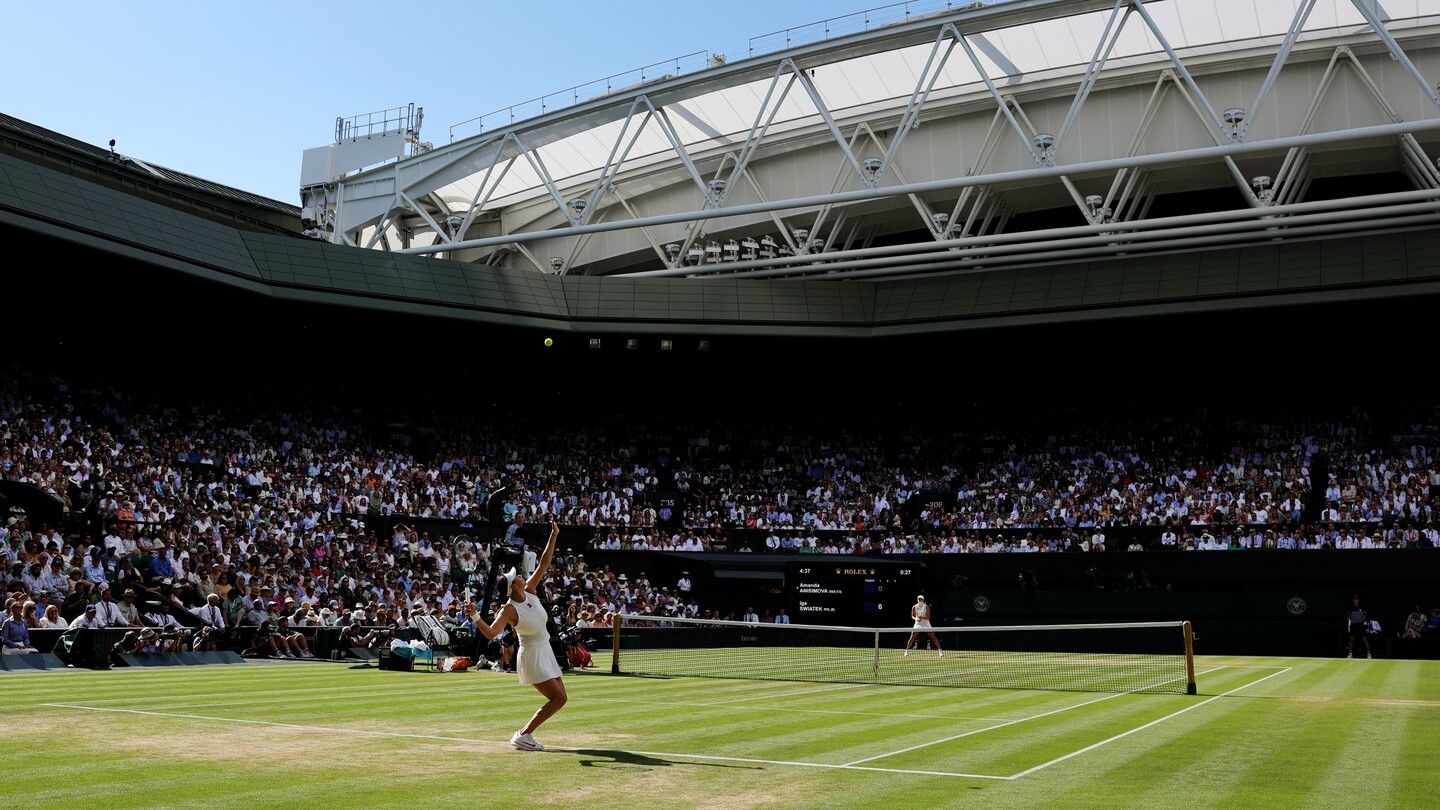
IBC Conference: The PGA Tour’s live moving drone with augmented reality shot tracing is rewriting the playbook for sports coverage – delivering Emmy-winning technology, immersive storytelling, and a glimpse into the future of golf broadcasting.
When the PGA Tour introduced real time drone-enabled shot tracing, it marked the first time live moving drones had been used to capture ball flight across all 18 holes of a competition. The impact was immediate. “We were very fortunate early this year to win a Sports Emmy for the George Wensel Technical Achievement Award,” said Jon Freedman, SVP, Media Broadcasting, PGA Tour.
The system, which combines drone video with data from ShotLink, LiDAR mapping, and Bolt6’s optical tracking, allows fans to see the flight of the ball in unprecedented detail. “ShotLink is the PGA Tour scoring system, and that really at the base layer, is foundational to any of the technologies, any of the analytics, any of the data, any of the visualisations that we show,” explained Alex Turnbull, VP, Production Technology & Analytics, PGA Tour.
Overcoming technical and on-course challenges
The innovation didn’t come overnight. “It was very much a crawl, walk, run from our experience with drones,” said Freedman. “Started off [with] very specific flight plans [and] only a certain amount of holes. As time has gone on and our players are actually realising that this is a massive asset to the broadcast, they’ve leaned in.”
For Bolt6, the technology challenge was formidable. “The initial conversation happened in October 23. Alex and I happened to pass each other on the staircase at PGA global home. And Alex was like, ‘Do you think you could track from [a drone]?’ We were foolish enough to say, ‘Yeah, sure,’” recalled James Japhet, Chief Revenue Officer & Co-Founder, Bolt6.
One of the biggest hurdles was figuring out how to generate reliable tracking information from drones that provided only video feeds. As Japhet explained, there was no positional data coming directly from the drone. Instead, Bolt6 had to encode the footage on site, send it up to AWS, and process it in near real time. By matching optical features within the video to LiDAR mapping of the course, they could determine the drone’s position, orientation, and focal length with extreme precision. This had to be achieved within milliseconds to ensure that the augmented reality overlays stayed in sync with the live broadcast.
How fans benefit
At its core, the PGA Tour’s drone AR system is designed to change the way audiences connect with golf. For decades, fans were left guessing where a ball had landed after a tee shot. As Turnbull recalled: “Before tracing, that was the number one, the white ball against the blue sky did not give viewers or fans any context of where that ball was going.”
With live drone AR, fans no longer wait for a stationary camera to pick up the action. They see the entire ball flight unfold in real time from new angles, with AR overlays showing distance, trajectory, and landing position.
For viewers at home, the effect is immediate: golf feels faster, more dynamic, and easier to follow. As an NBC Sports executive said in a video presented during the panel: “When you combine these two technologies now, it really is ‘must-see TV’ for golf broadcast. You know whether it was a first down line in football, but it was the first time trace was introduced in golf. There was something in that moment where people at home said, ‘This is what I need every day.’”
The drone AR system has not only enhanced the visuals for fans but also transformed how production teams and commentators approach live coverage. By integrating real-time shot tracing with ShotLink data, broadcasters can layer statistics and analysis directly into the action. This gives commentators fresh material and helps them frame the strategy behind each shot more clearly.
Instead of waiting for a camera cut or relying on guesswork, announcers can immediately explain club selection, shot shape, and course challenges while the ball is still in the air. For producers, the flexibility to deploy drones across multiple holes adds new storytelling options and makes it possible to cover the game more dynamically than ever before.
What comes next
Looking ahead, the focus is shifting to the greens. “When you think about the game of golf, 45% or 50% of all shots are on or around the greens, and that’s really a story that we haven’t really uncovered and unpacked and visualised just yet,” said Turnbull.
Freedman added: “We’re continuing to look for new and creative cameras that we can deploy in and around the golf course, as well as new ways to capture audio and bringing fans inside the game.”
.jpg)
Innovation Awards: Investigating 2026’s Content Creation finalists
What does it take to win a technological innovation award in Content Creation? Fergal Ringrose, Chair of Judges for the IBC Innovation Awards, assesses the top three projects in the running – revealing the key characteristics of each of the most competitive submissions.
Branded entertainment: Money, freedom, and audiences unite
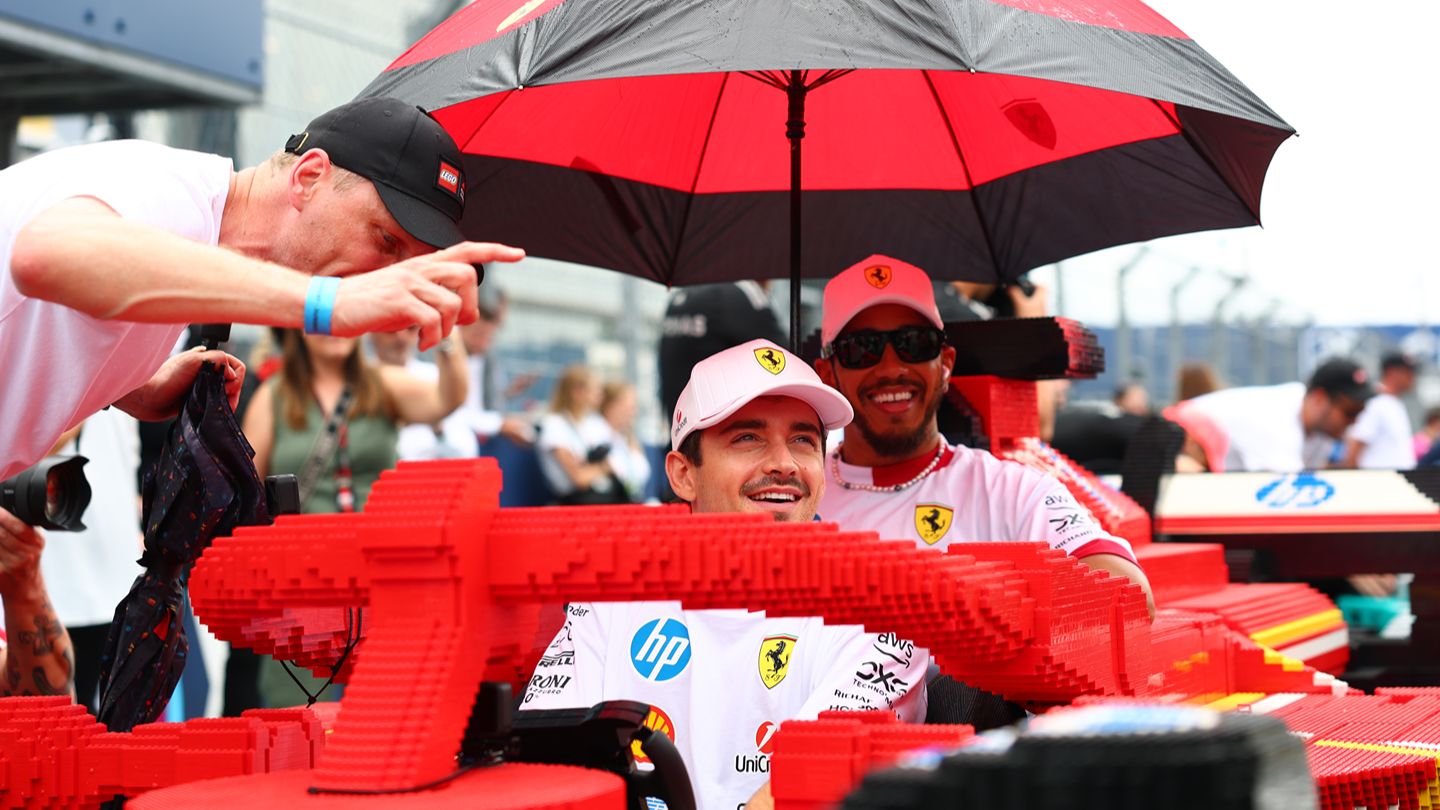
As traditional broadcasters battle decreasing budgets and attention spans, brands have come to the fore as collaborators in an increasingly lucrative and creatively fertile strand of the media business.

FRAMES: Automating the archive end-to-end
Despite the availability of hundreds of generative AI tools, pre-production environments are still struggling to find a semantic archive search solution that is technically feasible and effective in the real world. Enter FRAMES.
 (1).png)
IBC Accelerator: Scaling the future of immersive festival experiences
Stepping beyond the screen, this IBC Accelerator project has set out to meld immersive technology and audience interaction into an entirely new form of audience engagement.

Content Everywhere: From AI promise to commercial reality
If IBC2025 was defined by conversations about artificial intelligence’s transformative potential, the past 12 months have been about proving where it can deliver tangible business value. CE exhibitors now describe a market that has become more pragmatic.