
Sky has unveiled a hybrid hydrogen fuel cell and sodium battery solution, claiming that it is the first of its kind for the industry.
The battery system is intended to create a reliable, quieter, and zero-emission mobile power source and, therefore, to revolutionise the way film and TV productions are powered.
Developed by Sky’s engineers and production experts, the unit can reportedly do everything a diesel generator can, but without the fumes, noise, or carbon emissions. Instead, the solution produces water and heat as by-products. The water is then reused within the fuel cell system. According to Sky, the sodium batteries contain no precious or toxic minerals, and they are safer and more recyclable than lithium alternatives.
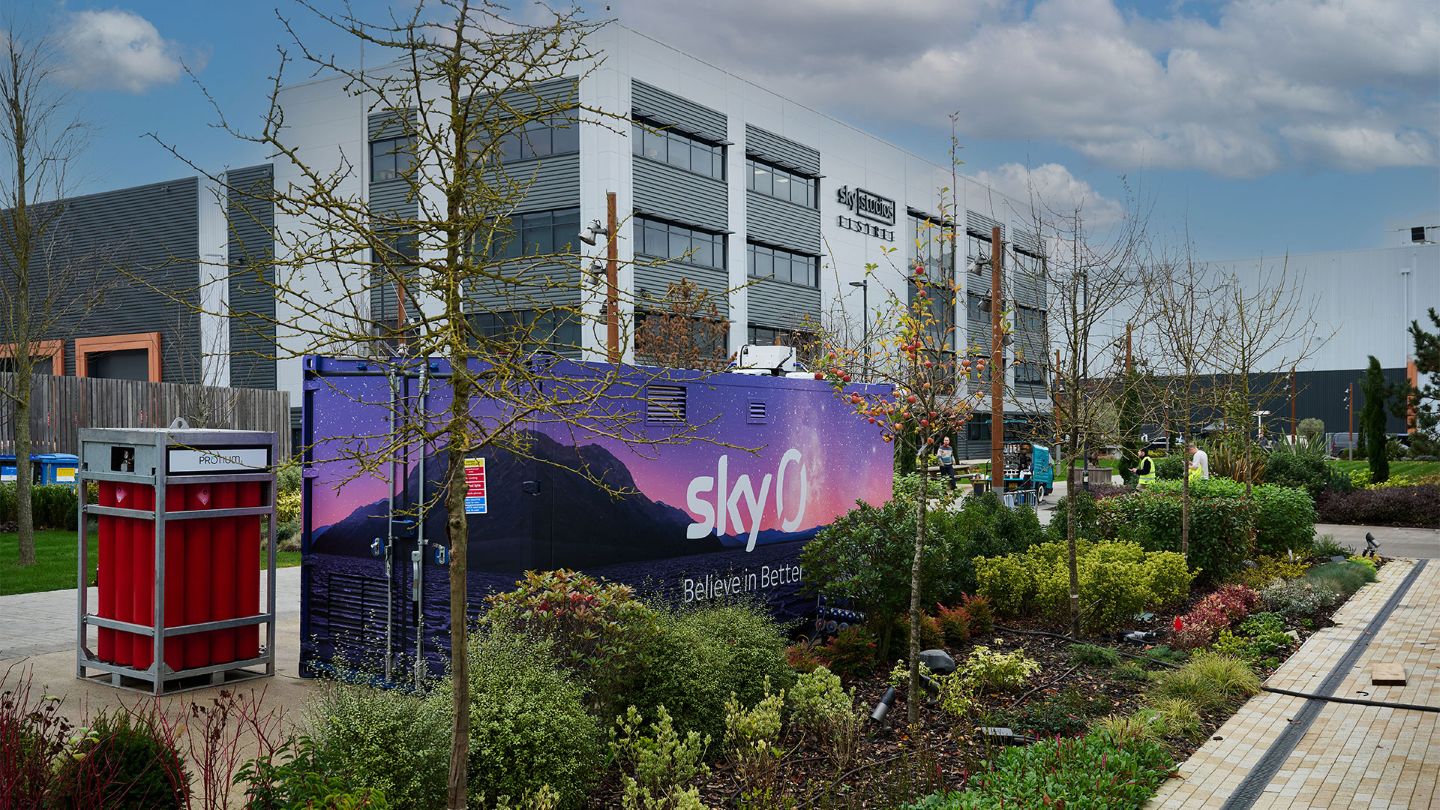
The company also highlighted that the technology can run on or off the grid, helping ease pressure on mains power during studio shoots or remote filming locations, for example.
Sky is now running live trials of the hybrid unit at its Sky Studios Elstree facility. While still in the testing phase and not yet commercially available, Sky has stated that it looks forward to sharing results.
“We're so proud to announce this clean-energy power unit – the first of its kind, capable of meeting the biggest production challenges,” said David Rhodes, Executive Chairman of Sky News. “Our people have been innovating in the field for more than three decades. Now, we're filling a real gap for smarter, quieter and more sustainable production solutions. We're excited about the trials ahead."
This announcement comes as Albert’s Screen New Deal revealed that approximately 50% of emissions from tentpole productions come from burning fossil fuels, with 35% from road transport and 15% from mobile power.
“This new technology is a brilliant example of how innovation and sustainability can go hand in hand,” said Fiona Ball, Group Director, Bigger Picture and Sustainability at Sky. “We designed it to meet the real needs of production teams while helping us cut emissions and improve air quality. It’s a practical solution that supports our journey to a low-carbon world and shows what’s possible when we embed sustainability into everything we do.”
Sky Studios Elstree recently received planning permission to add a further 10 stages to its film and TV complex in Borehamwood, Hertfordshire. Discover more here.

Arqiva completes major upgrade of UK digital radio platform
Broadcast infrastructure firm Arqiva has completed a major transformation of the infrastructure that supports commercial digital radio across the UK.
.jpg)
EIT Culture & Creativity opens €8.6m in start-up funding
EIT Culture & Creativity has opened a funding call offering up to €8.6m in funding and tailored acceleration support for creative European tech start-ups operating in architecture, audiovisual media, and fashion.
.jpg)
FCC lifts limit on media monopolisation
To reflect the changing media market, the US Federal Communications Commission (FCC) has voted to repeal its 39% national television multiple ownership rule and replace it with a case-by-case review.
UK gives greenlight to Paramount-WBD deal
Paramount Skydance’s $111bn acquisition of Warner Bros. Discovery (WBD) has been given the greenlight by UK authorities.
WBD adds European Athletics Championships to sports portfolio
Warner Bros Discovery has partnered with the European Broadcasting Union (EBU) to show the European Athletics Championships Birmingham 2026 in 45 markets across Europe.
.png)