In an internal, all-staff call held today, Rhodri Talfan Davies, Interim Director General for the BBC, revealed that the organisation is planning to cut between 1,800 and 2,000 jobs.
This represents approximately 10% of the BBC’s 21,508 employees.
This move is intended to save an additional £500m from the BBC's total annual operating costs of £5bn over the next two years, with the bulk of the new savings required in 2027/28.
In a statement sent to all BBC staff, Talfan Davies said: "Put simply, the gap between our costs and our income is growing. This is being driven by a number of factors: production inflation remains very high; our licence fee and commercial income is under pressure; and the global economy remains turbulent... Inevitably, these plans will also mean reducing the number of jobs in the BBC... I know this creates real uncertainty, but we wanted to be open about the challenge."
"Right now, each division is working through their plans to address the bigger challenge next year – looking at how they can reduce areas of duplication, what activity they might be able to stop, whilst prioritising content and services that have the biggest impact on audiences... Each division will share more about their plans for 2027/28 by September.
"In parallel, we’re also looking at our ways of working across the organisation to identify areas where we can reduce costs together – by harnessing new technology and developing more consistent or simpler processes."
Talfan Davies added that more details will come in September, but a voluntary redundancy scheme will be launched to avoid compulsory layoffs. Other measures will see cost control strategies implemented across recruitment, travel, consultancy, awards, and events.
According to Deadline sources, during the call, Talfan Davies said: “If we had a funding model that mirrored our consumption, all of this [the cuts] would go away. Our funding model has reached end of life.”
Indeed, in its 100-page Green Paper, the BBC recently revealed that last year’s licence fee income was “around a quarter less, or £1.2bn lower in real terms, than it was at the start of this Charter period”. The broadcaster pointed out that a key factor of this difficult funding situation was that “94% of people use the BBC each month, yet fewer than 80% of households contribute”.
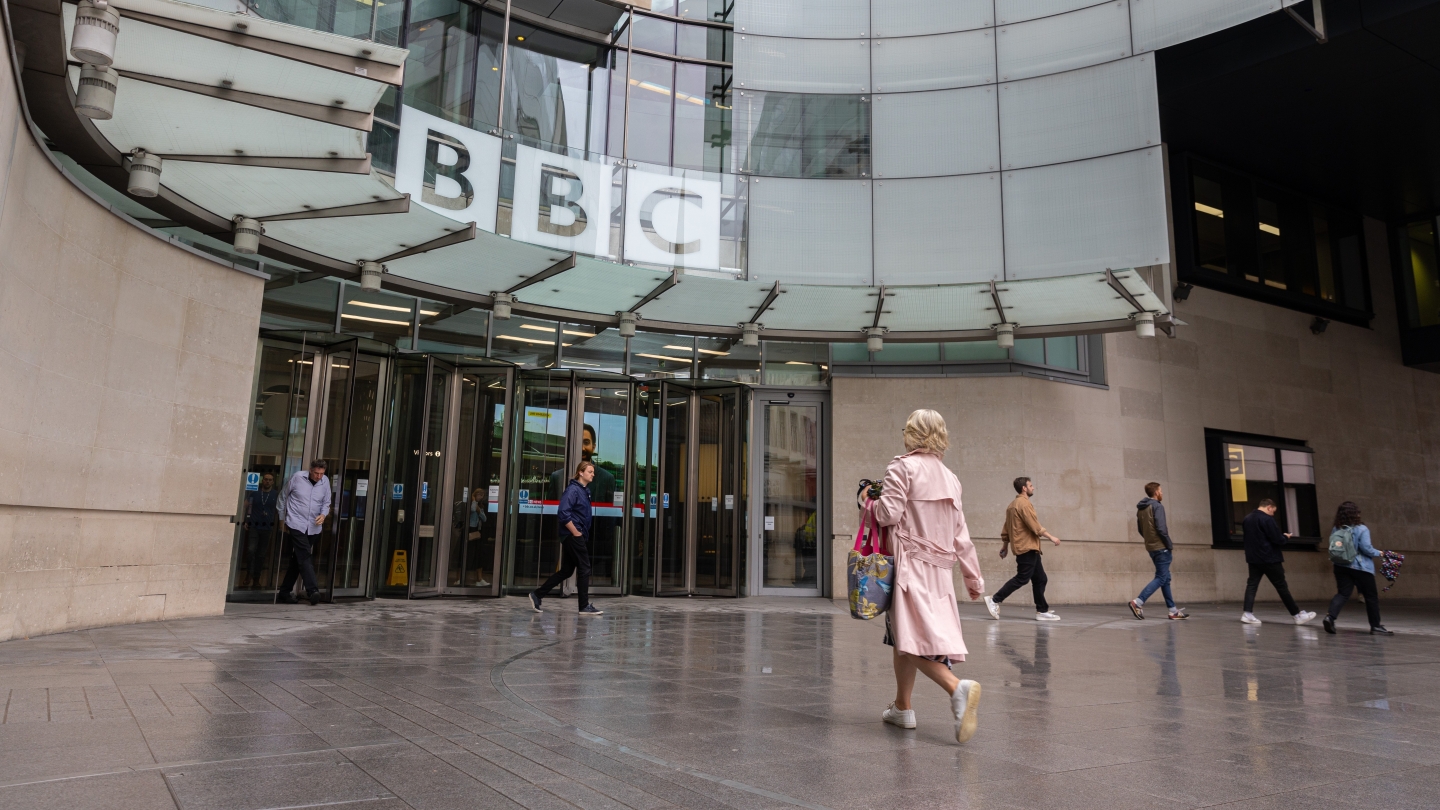
The news comes a few days after Tim Davie’s departure on 2 April 2026, and just one month before the arrival of the 18th Director-General of the BBC, Matt Brittin. The former President of Google EMEA will step into the role on 18 May 2026. He will reportedly be the first with no direct experience of television journalism.
The job cuts form part of plans first revealed in February 2026 to find approximately £500m in savings from the BBC’s total public service spending, which amounted to more than £4bn in 2025.
Responding to the news of the BBC's planned redundancies, Philippa Childs, Head of the union Bectu, stated: “Cuts of this magnitude will be devastating for the workforce and to the BBC as a whole. The BBC has faced funding cuts over the last decade, with real-terms income from the licence fee down £1.3bn – further cuts of this scale will inevitably damage its ability to deliver on its public mission.
“BBC staff are already under significant pressure after previous redundancies and Bectu will be engaging with the BBC to fully understand the implications of these cuts. This will also inevitably impact the wider creative industries ecosystem, given the BBC’s crucial anchor role in commissioning content and nurturing talent.
“At a time of fake news and an industry that is becoming more concentrated in the hands of a few multinational corporations, the UK needs a confident, ambitious, and sustainably funded BBC more than ever.
“The government must ensure that Charter Renewal puts the BBC’s funding on a more secure, long-term pathway and prevents our national broadcaster from facing death by a thousand cuts.”
Elsewhere in the industry, Josh D'Amaro, the recently appointed CEO of Walt Disney, emailed his employees to announce layoffs for approximately 1,000 positions within the company. Reuters found that the marketing department will be hit the hardest, closely followed by Disney's studio and television business, ESPN, products and technology, and certain corporate functions.
The industry-wide downsizing comes as executives increasingly turn their attention to the creator economy, AI solutions, and diversification strategies to survive declining audience interest in linear TV.
UK Culture Secretary Lisa Nandy recently pledged to provide the BBC with a permanent charter for the first time in its history, eliminating the current 10-year renewal process. Discover more here.
 (1).jpg)
Sociate AI targets the relevance gap in AI-generated advertising
Sociate AI is set to launch a campaign generation platform and demonstrate it at IBC2026, promising to turn emerging audience trends into relevant, ready-to-run campaigns in minutes.
.jpg)
Dutch broadcaster Avrotros pulls out of Eurovision 2027
Dutch broadcaster Avrotros has pulled out of next year's Eurovision Song Contest in protest at Israel's participation amid the war in Gaza.
.jpg)
DAZN renews Serie A rights in UK and Ireland
Sports streamer DAZN has renewed its Serie A rights in the United Kingdom and Ireland for the 2026-27 season.
.jpg)
European and North African broadcasters sign on for Mediterranean Games
A total of 14 broadcasters across 13 countries have teamed up to bring the Mediterranean Games Taranto 2026 to audiences across Europe and North Africa.
.jpg)
Top streamers rein in subscription price rises amid cost-of-living crunch
Netflix, Amazon, and Disney+ have started to rein in subscription price increases as consumers reach limits of willingness to pay, according to research from Ampere Analysis.

.jpg)