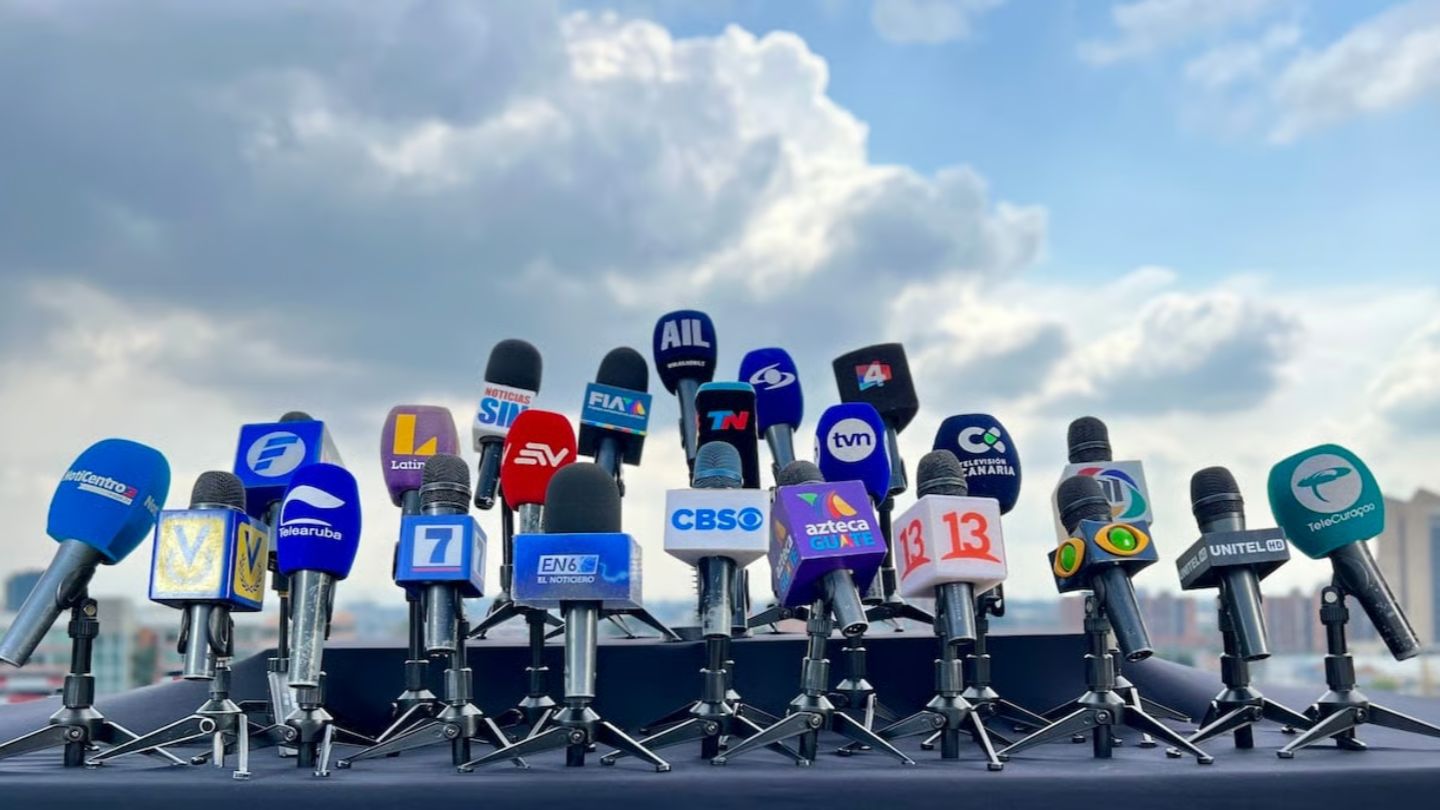
A federal US judge has ruled that an executive order by President Trump to defund public broadcasters NPR and PBS violated the First Amendment and is "unlawful and unenforceable."
In his ruling, Judge Randolph D. Moss of the US District Court for the District of Columbia, said "the First Amendment draws a line, which the government may not cross, at efforts to use government power – including the power of the purse – 'to punish or suppress disfavoured expression' by others."
Moss said the US President's executive order, "Ending Taxpayer Subsidies for Bias Media" issued in May 2025 "crosses that line."
Trump's executive order accused the public broadcasters of ideological bias, claiming that neither National Public Radio (NPR) or Public Broadcasting Service (PBS) “presents a fair, accurate, or unbiased portrayal of current events to taxpaying citizens."

The ruling will likely have minimal effect on the federal funding of public media, according to The New York Times.
It noted that two months after the executive order, Congress voted to claw back roughly $500m in annual funding for the Corporation for Public Broadcasting, the non-profit organisation that distributes federal money to NPR and PBS. The Corporation for Public Broadcasting has since shut down, and public radio and TV stations across the country have sought alternate forms of revenue.
However, The New York Times said the ruling could have implications for any future money Congress decides to allocate to public media, removing a hurdle that could have prevented lawmakers from restoring funding for NPR and PBS.
White House spokesperson Abigail Jackson said in a statement: "This is a ridiculous ruling by an activist judge attempting to undermine the law. NPR and PBS have no right to receive taxpayer funds, and Congress already voted to defund them. The Trump Administration looks forward to ultimate victory on the issue."
In a statement, NPR said the ruling "is a decisive affirmation of the rights of a free and independent press – and a win for NPR, our network of stations, and our tens of millions of listeners nationwide."
"Public media exists to serve the public interest – that of Americans – not that of any political agenda or elected official. NPR and our member stations will continue delivering independent, fact-based, high-quality reporting to communities across the US, regardless of the administration of the day."
In a statement, PBS, said it was "thrilled with today's decision," calling the US President's order a "textbook unconstitutional viewpoint discrimination and retaliation, in violation of longstanding First Amendment principles."
The BBC recently asked US District Judge Roy K. Altman to throw out Donald Trump’s $10bn (£7.45bn) defamation lawsuit against the corporation. Discover more here.
Netflix uses GenAI on 300 titles in 2026
Netflix has revealed that nearly 300 titles on its platform have used generative AI, from early concept stages and pre-visualisation through to post-production and release.

Poppy Dixon appointed BBC Head of Documentaries
The BBC has appointed former Sky executive Poppy Dixon as its Head of Documentaries.

Virgin Media launches AI robots to monitor TV network in real-time
Virgin Media has created its own AI robots to monitor its television network quality in real-time in a bid to quickly identify and resolve any issues when they occur.

US government seizes over 1,000 websites streaming FIFA World Cup
Global anti-piracy coalition the Alliance for Creativity and Entertainment (ACE) has applauded the US government’s seizure of over 1000 illegal websites streaming the FIFA World Cup over the past month.

Channel 4 names Simon Rexworthy as Chief Strategy and Corporate Development Officer
Simon Rexworthy has been named Channel 4’s Chief Strategy and Corporate Development Officer. He will report to Chief Executive Priya Dogra and join the broadcaster’s executive committee.